 Sheets Daily is a daily updated site for those who wants to access popular free sheet music easily,
letting them download the sheet music for free for trial purposes.
It's completely free to download and try the listed sheet music, but you have to delete the files after 24 hours of trial.
Don't forget, if you like the piece of music you have just learned playing,
treat the artist with respect, and go buy the original sheet music.
Sheets Daily is a daily updated site for those who wants to access popular free sheet music easily,
letting them download the sheet music for free for trial purposes.
It's completely free to download and try the listed sheet music, but you have to delete the files after 24 hours of trial.
Don't forget, if you like the piece of music you have just learned playing,
treat the artist with respect, and go buy the original sheet music.
Cello Sheet Music
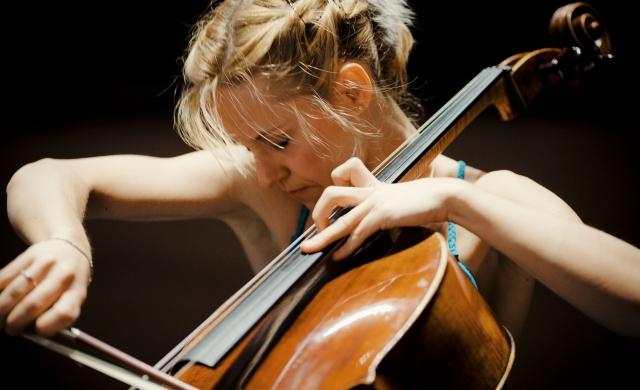 "Music, in performance, is a type of sculpture. The air in the performance is sculpted into something." Frank Zappa
Mozart
Wolfgang Amadeus Mozart, full name Johann Chrysostom Wolfgang Amadeus Mozart (27 January 1756 â 5 December 1791) was a prolific and influential composer of the Classical era. His over 600 compositions include works widely acknowledged as pinnacles of symphonic, concertante, chamber, piano, operatic, and choral music. Mozart is among the most enduringly popular of classical composers, and many of his works are part of the standard concert repertoire.
Mozart's music, like Haydn's, stands as an archetypal example of the Classical style. His works spanned the period during which that style transformed from one exemplified by the style galant to one that began to incorporate some of the contrapuntal complexities of the late Baroque, complexities against which the galant style had been a reaction. Mozart's own stylistic development closely paralleled the development of the classical style as a whole. In addition, he was a versatile composer and wrote in almost every major genre, including symphony, opera, the solo concerto, chamber music including string quartet and string quintet, and the piano sonata. While none of these genres were new, the piano concerto was almost single-handedly developed and popularized by Mozart. He also wrote a great deal of religious music, including masses; and he composed many dances, divertimenti, serenades, and other forms of light entertainment.
The central traits of the classical style can be identified in Mozart's music. Clarity, balance, and transparency are hallmarks of his work.
Mozart's music, like Haydn's, stands as an archetypal example of the Classical style. His works spanned the period during which that style transformed from one exemplified by the style galant to one that began to incorporate some of the contrapuntal complexities of the late Baroque, complexities against which the galant style had been a reaction. Mozart's own stylistic development closely paralleled the development of the classical style as a whole. In addition, he was a versatile composer and wrote in almost every major genre, including symphony, opera, the solo concerto, chamber music including string quartet and string quintet, and the piano sonata. While none of these genres were new, the piano concerto was almost single-handedly developed and popularized by Mozart. He also wrote a great deal of religious music, including masses; and he composed many dances, divertimenti, serenades, and other forms of light entertainment.
The central traits of the classical style can be identified in Mozart's music. Clarity, balance, and transparency are hallmarks of his work.
Frank Sinatra
Francis Albert "Frank" Sinatra (December 12, 1915 â May 14, 1998) was an American singer and actor.
Beginning his musical career in the swing era with Harry James and Tommy Dorsey, Sinatra became a solo artist with great success in the early to mid-1940s, being the idol of the "bobby soxers". His professional career had stalled by the 1950s, but it was reborn in 1954 after he won the Academy Award for Best Supporting Actor.
He signed with Capitol Records and released several critically lauded albums (such as In the Wee Small Hours, Songs for Swingin' Lovers, Come Fly with Me, Only the Lonely and Nice 'n' Easy). Sinatra left Capitol to found his own record label, Reprise Records (finding success with albums such as Ring-A-Ding-Ding, Sinatra at the Sands and Francis Albert Sinatra & Antonio Carlos Jobim), toured internationally, and fraternized with the Rat Pack and President John F. Kennedy in the early 1960s. Sinatra turned 50 in 1965, recorded the retrospective September of My Years, starred in the Emmy-winning television special Frank Sinatra: A Man and His Music, and scored hits with "Strangers in the Night" and "My Way".
Sinatra attempted to weather the changing tastes in popular music, but with dwindling album sales and after appearing in several poorly received films, he retired in 1971. Coming out of retirement in 1973, he recorded several albums, scoring a hit with "(Theme From) New York, New York" in 1980, and toured both within the United States and internationally until a few years before his death in 1998.
Sinatra also forged a career as a dramatic actor, winning the Academy Award for Best Supporting Actor for his performance in From Here to Eternity, and he was nominated for the Academy Award for Best Actor for The Man with the Golden Arm. His also starred in such musicals as High Society, Pal Joey, Guys and Dolls and On the Town. Sinatra was honored with the Kennedy Center Honors in 1983 and awarded the Presidential Medal of Freedom by Ronald Reagan in 1985 and the Congressional Gold Medal in 1997. Sinatra was also the recipient of eleven Grammy Awards, including the Grammy Trustees Award, Grammy Legend Award and the Grammy Lifetime Achievement Award.
Beginning his musical career in the swing era with Harry James and Tommy Dorsey, Sinatra became a solo artist with great success in the early to mid-1940s, being the idol of the "bobby soxers". His professional career had stalled by the 1950s, but it was reborn in 1954 after he won the Academy Award for Best Supporting Actor.
He signed with Capitol Records and released several critically lauded albums (such as In the Wee Small Hours, Songs for Swingin' Lovers, Come Fly with Me, Only the Lonely and Nice 'n' Easy). Sinatra left Capitol to found his own record label, Reprise Records (finding success with albums such as Ring-A-Ding-Ding, Sinatra at the Sands and Francis Albert Sinatra & Antonio Carlos Jobim), toured internationally, and fraternized with the Rat Pack and President John F. Kennedy in the early 1960s. Sinatra turned 50 in 1965, recorded the retrospective September of My Years, starred in the Emmy-winning television special Frank Sinatra: A Man and His Music, and scored hits with "Strangers in the Night" and "My Way".
Sinatra attempted to weather the changing tastes in popular music, but with dwindling album sales and after appearing in several poorly received films, he retired in 1971. Coming out of retirement in 1973, he recorded several albums, scoring a hit with "(Theme From) New York, New York" in 1980, and toured both within the United States and internationally until a few years before his death in 1998.
Sinatra also forged a career as a dramatic actor, winning the Academy Award for Best Supporting Actor for his performance in From Here to Eternity, and he was nominated for the Academy Award for Best Actor for The Man with the Golden Arm. His also starred in such musicals as High Society, Pal Joey, Guys and Dolls and On the Town. Sinatra was honored with the Kennedy Center Honors in 1983 and awarded the Presidential Medal of Freedom by Ronald Reagan in 1985 and the Congressional Gold Medal in 1997. Sinatra was also the recipient of eleven Grammy Awards, including the Grammy Trustees Award, Grammy Legend Award and the Grammy Lifetime Achievement Award.
Led Zeppelin
Led Zeppelin were an English rock band formed in 1968 by Jimmy Page (guitar), Robert Plant (vocals), John Paul Jones (bass guitar, keyboards) and John Bonham (drums). With their heavy, guitar-driven sound, Led Zeppelin are regarded as one of the first heavy metal bands. However, the band's individualistic style draws from many sources and transcends any one genre. Their rock-infused interpretation of the blues and folk genres also incorporated rockabilly, reggae, soul, funk, classical, Celtic, Indian, Arabic, pop, Latin and country. The band did not release the popular songs from their albums as singles in the UK, as they preferred to develop the concept of album-oriented rock.
Close to 30 years after disbanding following Bonham's death in 1980, the band continues to be held in high regard for their artistic achievements, commercial success and broad influence. The band have sold more than 300 million albums worldwide, including 111.5 million sales in the United States and they have had all of their original studio albums reach the U.S. Billboard Top 10, with six reaching the number one spot. Led Zeppelin are ranked No. 1 on VH1's 100 Greatest Artists of Hard Rock. Rolling Stone magazine has described Led Zeppelin as "the heaviest band of all time" and "the biggest band of the 70s".
On 10 December 2007 the surviving members of Led Zeppelin reunited (along with deceased drummer John Bonham's son Jason) for the Ahmet Ertegün Tribute Concert at The O2 in London.
Close to 30 years after disbanding following Bonham's death in 1980, the band continues to be held in high regard for their artistic achievements, commercial success and broad influence. The band have sold more than 300 million albums worldwide, including 111.5 million sales in the United States and they have had all of their original studio albums reach the U.S. Billboard Top 10, with six reaching the number one spot. Led Zeppelin are ranked No. 1 on VH1's 100 Greatest Artists of Hard Rock. Rolling Stone magazine has described Led Zeppelin as "the heaviest band of all time" and "the biggest band of the 70s".
On 10 December 2007 the surviving members of Led Zeppelin reunited (along with deceased drummer John Bonham's son Jason) for the Ahmet Ertegün Tribute Concert at The O2 in London.
Apocalyptica
Apocalyptica is a Finnish cello metal band, composed of classically trained cellists and, since 2005, a drummer. Three of the cellists are graduates of the Sibelius Academy in Helsinki, Finland. Their music features elements from classical music, neo-classical metal, thrash metal, and symphonic metal.
Beethoven
Ludwig van Beethoven (16 December 1770 - 26 March 1827) was a German composer and pianist. He was a crucial figure in the transitional period between the Classical and Romantic eras in Western classical music, and remains one of the most respected and influential composers of all time.
Born in Bonn, then in the Electorate of Cologne (now in modern-day Germany), he moved to Vienna in his early twenties and settled there, studying with Joseph Haydn and quickly gaining a reputation as a virtuoso pianist. Beethoven's hearing gradually deteriorated beginning in his twenties, yet he continued to compose masterpieces, and to conduct and perform, even after he was completely deaf.
Born in Bonn, then in the Electorate of Cologne (now in modern-day Germany), he moved to Vienna in his early twenties and settled there, studying with Joseph Haydn and quickly gaining a reputation as a virtuoso pianist. Beethoven's hearing gradually deteriorated beginning in his twenties, yet he continued to compose masterpieces, and to conduct and perform, even after he was completely deaf.
Astor Piazzolla
Ástor Pantaleón Piazzolla (March 11, 1921 – July 4, 1992) was an Argentine tango composer and bandoneón player. His oeuvre revolutionized the traditional tango into a new style termed nuevo tango, incorporating elements from jazz and classical music. An excellent bandoneonist, he regularly performed his own compositions with different ensembles.
Piazzolla's nuevo tango was distinct from the traditional tango in its incorporation of elements of jazz, its use of extended harmonies and dissonance, its use of counterpoint, and its ventures into extended compositional forms. As Argentine psychoanalyst Carlos Kuri has pointed out, Piazzolla's fusion of tango with this wide range of other recognizable Western musical elements was so successful that it produced a new individual style transcending these influences. It is precisely this success, and individuality, that makes it hard to pin down where particular influences reside in his compositions, but some aspects are clear. The use of the passacaglia technique of a circulating bass line and harmonic sequence, invented and much used in 17th and 18th century baroque music but also central to the idea of jazz "changes", predominates in most of Piazzolla's mature compositions. Another clear reference to the baroque is the often complex and virtuosic counterpoint that sometimes follows strict fugal behavior but more often simply allows each performer in the group to assert his voice. A further technique that emphasises this sense of democracy and freedom among the musicians is improvisation that is borrowed from jazz in concept, but in practice involves a different vocabulary of scales and rhythms that stay within the parameters of the established tango sound-world. Pablo Ziegler has been particularly responsible for developing this aspect of the style both within Piazzolla's groups and since the composer's death.
Piazzolla's nuevo tango was distinct from the traditional tango in its incorporation of elements of jazz, its use of extended harmonies and dissonance, its use of counterpoint, and its ventures into extended compositional forms. As Argentine psychoanalyst Carlos Kuri has pointed out, Piazzolla's fusion of tango with this wide range of other recognizable Western musical elements was so successful that it produced a new individual style transcending these influences. It is precisely this success, and individuality, that makes it hard to pin down where particular influences reside in his compositions, but some aspects are clear. The use of the passacaglia technique of a circulating bass line and harmonic sequence, invented and much used in 17th and 18th century baroque music but also central to the idea of jazz "changes", predominates in most of Piazzolla's mature compositions. Another clear reference to the baroque is the often complex and virtuosic counterpoint that sometimes follows strict fugal behavior but more often simply allows each performer in the group to assert his voice. A further technique that emphasises this sense of democracy and freedom among the musicians is improvisation that is borrowed from jazz in concept, but in practice involves a different vocabulary of scales and rhythms that stay within the parameters of the established tango sound-world. Pablo Ziegler has been particularly responsible for developing this aspect of the style both within Piazzolla's groups and since the composer's death.
Max Reger
Max Reger Composer Description Johann Baptist Joseph Maximilian Reger is a German composer, pianist, organist, conductor and teacher. Date of birth: March 19, 1873, Brand, Germany Date and place of death: May 11, 1916, Leipzig, Germany
Eric Whitacre
Eric Edward Whitacre (born January 2, 1970) is an American composer, conductor, and speaker known for his choral, orchestral, and wind ensemble music. In March 2016, he was appointed as Los Angeles Master Chorale's first artist-in-residence at the Walt Disney Concert Hall.
Tchaikovsky
Pyotr Il'yich Tchaikovsky (May 7 1840 â November 6 1893) was a Russian composer of the Romantic era. While not part of the nationalistic music group known as "The Five", Tchaikovsky wrote music which, in the opinion of Harold Schonberg, was distinctly Russian: plangent, introspective, with modally-inflected melody and harmony.
Aesthetically, Tchaikovsky remained open to all aspects of Saint Petersburg musical life. He was impressed by Serov and Balakirev as well as the classical values upheld by the conservatory. Both the progressive and conservative camps in Russian music at the time attempted to win him over. Tchaikovsky charted his compositional course between these two factions, retaining his individuality as a composer as well as his Russian identity. In this he was influenced by the ideals of his teacher Nikolai Rubinstein and Nikolai's brother Anton.
Tchaikovsky's musical cosmopolitanism led him to be favored by many Russian music-lovers over the "Russian" harmonies and styles of Mussorgsky, Borodin and Rimsky-Korsakov.
Nonetheless he frequently adapted Russian traditional melodies and dance forms in his music, which enhanced his success in his home country. The success in St. Petersburg at the premiere of his Third Orchestral Suite may have been due in large part to his concluding the work with a polonaise. He also used a polonaise for the final movement of his Third Symphony.
Aesthetically, Tchaikovsky remained open to all aspects of Saint Petersburg musical life. He was impressed by Serov and Balakirev as well as the classical values upheld by the conservatory. Both the progressive and conservative camps in Russian music at the time attempted to win him over. Tchaikovsky charted his compositional course between these two factions, retaining his individuality as a composer as well as his Russian identity. In this he was influenced by the ideals of his teacher Nikolai Rubinstein and Nikolai's brother Anton.
Tchaikovsky's musical cosmopolitanism led him to be favored by many Russian music-lovers over the "Russian" harmonies and styles of Mussorgsky, Borodin and Rimsky-Korsakov.
Nonetheless he frequently adapted Russian traditional melodies and dance forms in his music, which enhanced his success in his home country. The success in St. Petersburg at the premiere of his Third Orchestral Suite may have been due in large part to his concluding the work with a polonaise. He also used a polonaise for the final movement of his Third Symphony.
Haydn
Franz Joseph Haydn (March 31, 1732 – May 31, 1809) was one of the most prominent composers of the classical period, and is called by some the "Father of the Symphony" and "Father of the String Quartet".
A life-long resident of Austria, Haydn spent most of his career as a court musician for the wealthy Hungarian Esterházy family on their remote estate. Isolated from other composers and trends in music until the later part of his long life, he was, as he put it, "forced to become original".
Although Haydn is still often called "Franz Joseph Haydn", the composer did not use the name "Franz" during his lifetime and this misnomer is avoided by modern scholars and historians. Joseph Haydn was the brother of Michael Haydn, himself a highly regarded composer, and Johann Evangelist Haydn, a tenor.
A central characteristic of Haydn's music is the development of larger structures out of very short, simple musical motifs, often derived from standard accompanying figures. The music is often quite formally concentrated, and the important musical events of a movement can unfold rather quickly.
Haydn's work was central to the development of what came to be called sonata form. His practice, however, differed in some ways from that of Mozart and Beethoven, his younger contemporaries who likewise excelled in this form of composition. Haydn was particularly fond of the so-called "monothematic exposition", in which the music that establishes the dominant key is similar or identical to the opening theme. Haydn also differs from Mozart and Beethoven in his recapitulation sections, where he often rearranges the order of themes compared to the exposition and uses extensive thematic development.
Perhaps more than any other composer's, Haydn's music is known for its humour. The most famous example is the sudden loud chord in the slow movement of his "Surprise" symphony; Haydn's many other musical jokes include numerous false endings (e.g., in the quartets Op. 33 No. 2 and Op. 50 No. 3), and the remarkable rhythmic illusion placed in the trio section of the third movement of Op. 50 No. 1.
A life-long resident of Austria, Haydn spent most of his career as a court musician for the wealthy Hungarian Esterházy family on their remote estate. Isolated from other composers and trends in music until the later part of his long life, he was, as he put it, "forced to become original".
Although Haydn is still often called "Franz Joseph Haydn", the composer did not use the name "Franz" during his lifetime and this misnomer is avoided by modern scholars and historians. Joseph Haydn was the brother of Michael Haydn, himself a highly regarded composer, and Johann Evangelist Haydn, a tenor.
A central characteristic of Haydn's music is the development of larger structures out of very short, simple musical motifs, often derived from standard accompanying figures. The music is often quite formally concentrated, and the important musical events of a movement can unfold rather quickly.
Haydn's work was central to the development of what came to be called sonata form. His practice, however, differed in some ways from that of Mozart and Beethoven, his younger contemporaries who likewise excelled in this form of composition. Haydn was particularly fond of the so-called "monothematic exposition", in which the music that establishes the dominant key is similar or identical to the opening theme. Haydn also differs from Mozart and Beethoven in his recapitulation sections, where he often rearranges the order of themes compared to the exposition and uses extensive thematic development.
Perhaps more than any other composer's, Haydn's music is known for its humour. The most famous example is the sudden loud chord in the slow movement of his "Surprise" symphony; Haydn's many other musical jokes include numerous false endings (e.g., in the quartets Op. 33 No. 2 and Op. 50 No. 3), and the remarkable rhythmic illusion placed in the trio section of the third movement of Op. 50 No. 1.
Joaquin Rodrigo
Joaquín Rodrigo Vidre, Marqués de los Jardines de Aranjuez, (Sagunto (Spain) 22 November 1901 – Madrid (Spain) 6 July 1999), was a composer of classical music and a virtuoso pianist. Despite being nearly blind from an early age, he achieved great success. Rodrigo's music counts among some of the most popular of the 20th century, particularly his Concierto de Aranjuez, considered one of the pinnacles of the Spanish music and guitar concerto repertoire.
Dmitri Shostakovich
Dmitri Dmitriyevich Shostakovich, Russian composer. The USSR Supreme Soviet MP was awarded the Order of Lenin. The composer, who wrote the most important symphonies of the 20th century, produced many works, including soundtrack, song and jazz.
Bill conti
Bill William Conti is an American composer and conductor, best known for his film scores, including Rocky, Karate Kid, For Your Eyes Only, Dynasty, and The Right Stuff, which earned him an Academy Award for Best Original Score.
Rachmaninoff
Sergei Vasilievich Rachmaninoff (1 April 1873 - 28 March 1943) was a Russian composer, pianist, and conductor. He was one of the finest pianists of his day and, as a composer, the last great representative of Russian late Romanticism in classical music. Early influences of Tchaikovsky, Rimsky-Korsakov and other Russian composers gave way to a thoroughly personal idiom which included a pronounced lyricism, expressive breadth, structural ingenuity and a tonal palette of rich, distinctive orchestral colors.
Understandably, the piano figures prominently in Rachmaninoff's compositional output, either as a solo instrument or as part of an ensemble. He made it a point, however, to use his own skills as a performer to explore fully the expressive possibilities of the instrument. Even in his earliest works, he revealed a sure grasp of idiomatic piano writing and a striking gift for melody. In some of his early orchestral pieces he showed the first signs of a talent for tone painting, which he would perfect in The Isle of the Dead, and he began to show a similar penchant for vocal writing in two early sets of songs, Opp. 4 and 8. Rachmaninoff's masterpiece, however, is his choral symphony The Bells, in which all of his talents are fused and unified.
Rachmaninoff sometimes felt threatened by the success of modernists such as Scriabin and Prokofiev and wondered whether to cease composing even before he left Russia. His musical philosophy was rooted in the Russian spiritual tradition, where the role of the artist was to create beauty and to speak the truth from the depths of his heart. In his last major interview, in 1941, he admitted his music, like Russian music, was a product of his temperament. He said, on another occasion, "The new kind of music seems to create not from the heart but from the head. Its composers think rather than feel. They have not the capacity to make their works exalt—they meditate, protest, analyze, reason, calculate and brood, but they do not exalt."
Understandably, the piano figures prominently in Rachmaninoff's compositional output, either as a solo instrument or as part of an ensemble. He made it a point, however, to use his own skills as a performer to explore fully the expressive possibilities of the instrument. Even in his earliest works, he revealed a sure grasp of idiomatic piano writing and a striking gift for melody. In some of his early orchestral pieces he showed the first signs of a talent for tone painting, which he would perfect in The Isle of the Dead, and he began to show a similar penchant for vocal writing in two early sets of songs, Opp. 4 and 8. Rachmaninoff's masterpiece, however, is his choral symphony The Bells, in which all of his talents are fused and unified.
Rachmaninoff sometimes felt threatened by the success of modernists such as Scriabin and Prokofiev and wondered whether to cease composing even before he left Russia. His musical philosophy was rooted in the Russian spiritual tradition, where the role of the artist was to create beauty and to speak the truth from the depths of his heart. In his last major interview, in 1941, he admitted his music, like Russian music, was a product of his temperament. He said, on another occasion, "The new kind of music seems to create not from the heart but from the head. Its composers think rather than feel. They have not the capacity to make their works exalt—they meditate, protest, analyze, reason, calculate and brood, but they do not exalt."
Gabriel Faure
Gabriel Urbain Fauré (12 May 1845 – 4 November 1924) was a French composer, organist, pianist, and teacher. He was the foremost French composer of his generation, and his musical style influenced many 20th century composers. His harmonic and melodic language affected how harmony was later taught.
César Franck
César-Auguste-Jean-Guillaume-Hubert Franck was a composer, pianist, organist, and music teacher who worked in Paris during his adult life. He was born at Liège, in what is now Belgium. He gave his first concerts there in 1834 and studied privately in Paris from 1835, where his teachers included Anton Reicha.
Bach
Johann Sebastian Bach (31 March 1685 – 28 July 1750) was a German composer and organist whose sacred and secular works for choir, orchestra, and solo instruments drew together the strands of the Baroque period and brought it to its ultimate maturity. Although he introduced no new forms, he enriched the prevailing German style with a robust contrapuntal technique, an unrivalled control of harmonic and motivic organisation in composition for diverse musical forces, and the adaptation of rhythms and textures from abroad, particularly Italy and France.
Revered for their intellectual depth and technical and artistic beauty, Bach's works include the Brandenburg concertos; the Goldberg Variations; the English Suites, French Suites, Partitas, and Well-Tempered Clavier; the Mass in B Minor; the St. Matthew Passion; the St. John Passion; The Musical Offering; The Art of Fugue; the Sonatas and Partitas for violin solo; the Cello Suites; more than 200 surviving cantatas; and a similar number of organ works, including the celebrated Toccata and Fugue in D Minor.
While Bach's fame as an organist was great during his lifetime, he was not particularly well-known as a composer. His adherence to Baroque forms and contrapuntal style was considered "old-fashioned" by his contemporaries, especially late in his career when the musical fashion tended towards Rococo and later Classical styles. A revival of interest and performances of his music began early in the 19th century, and he is now widely considered to be one of the greatest composers in the Western tradition.
Revered for their intellectual depth and technical and artistic beauty, Bach's works include the Brandenburg concertos; the Goldberg Variations; the English Suites, French Suites, Partitas, and Well-Tempered Clavier; the Mass in B Minor; the St. Matthew Passion; the St. John Passion; The Musical Offering; The Art of Fugue; the Sonatas and Partitas for violin solo; the Cello Suites; more than 200 surviving cantatas; and a similar number of organ works, including the celebrated Toccata and Fugue in D Minor.
While Bach's fame as an organist was great during his lifetime, he was not particularly well-known as a composer. His adherence to Baroque forms and contrapuntal style was considered "old-fashioned" by his contemporaries, especially late in his career when the musical fashion tended towards Rococo and later Classical styles. A revival of interest and performances of his music began early in the 19th century, and he is now widely considered to be one of the greatest composers in the Western tradition.
Friedrich Dotzauer
Justus Johann Friedrich Dotzauer was a German cellist and composer
Brahms
Johannes Brahms (May 7, 1833 â April 3, 1897) was a German composer of the Romantic period. He was born in Hamburg and in his later years he settled in Vienna, Austria.
Brahms maintained a Classical sense of form and order in his works â in contrast to the opulence of the music of many of his contemporaries. Thus many admirers (though not necessarily Brahms himself) saw him as the champion of traditional forms and "pure music," as opposed to the New German embrace of program music.
Brahms venerated Beethoven: in the composer's home, a marble bust of Beethoven looked down on the spot where he composed, and some passages in his works are reminiscent of Beethoven's style. The main theme of the finale of Brahms's First Symphony is reminiscent of the main theme of the finale of Beethoven's Ninth, and when this resemblance was pointed out to Brahms he replied that any ass â jeder Esel â could see that.
Ein deutsches Requiem was partially inspired by his mother's death in 1865, but also incorporates material from a Symphony he started in 1854, but abandoned following Schumann's suicide attempt. He once wrote that the Requiem "belonged to Schumann". The first movement of this abandoned Symphony was re-worked as the first movement of the First Piano Concerto.
Brahms also loved the Classical composers Mozart and Haydn. He collected first editions and autographs of their works, and edited performing editions. He also studied the music of pre-classical composers, including Giovanni Gabrieli, Johann Adolph Hasse, Heinrich Schütz and especially Johann Sebastian Bach. His friends included leading musicologists, and with Friedrich Chrysander he edited an edition of the works of François Couperin. He looked to older music for inspiration in the arts of strict counterpoint; the themes of some of his works are modelled on Baroque sources, such as Bach's The Art of Fugue in the fugal finale of Cello Sonata No. 1, or the same composer's Cantata No. 150 in the passacaglia theme of the Fourth Symphony's finale.
Brahms maintained a Classical sense of form and order in his works â in contrast to the opulence of the music of many of his contemporaries. Thus many admirers (though not necessarily Brahms himself) saw him as the champion of traditional forms and "pure music," as opposed to the New German embrace of program music.
Brahms venerated Beethoven: in the composer's home, a marble bust of Beethoven looked down on the spot where he composed, and some passages in his works are reminiscent of Beethoven's style. The main theme of the finale of Brahms's First Symphony is reminiscent of the main theme of the finale of Beethoven's Ninth, and when this resemblance was pointed out to Brahms he replied that any ass â jeder Esel â could see that.
Ein deutsches Requiem was partially inspired by his mother's death in 1865, but also incorporates material from a Symphony he started in 1854, but abandoned following Schumann's suicide attempt. He once wrote that the Requiem "belonged to Schumann". The first movement of this abandoned Symphony was re-worked as the first movement of the First Piano Concerto.
Brahms also loved the Classical composers Mozart and Haydn. He collected first editions and autographs of their works, and edited performing editions. He also studied the music of pre-classical composers, including Giovanni Gabrieli, Johann Adolph Hasse, Heinrich Schütz and especially Johann Sebastian Bach. His friends included leading musicologists, and with Friedrich Chrysander he edited an edition of the works of François Couperin. He looked to older music for inspiration in the arts of strict counterpoint; the themes of some of his works are modelled on Baroque sources, such as Bach's The Art of Fugue in the fugal finale of Cello Sonata No. 1, or the same composer's Cantata No. 150 in the passacaglia theme of the Fourth Symphony's finale.
Vivaldi
Antonio Lucio Vivaldi (March 4, 1678 â July 28, 1741), nicknamed il Prete Rosso ("The Red Priest"), was a Venetian priest and Baroque music composer, as well as a famous virtuoso violinist; he was born and raised in the Republic of Venice. The Four Seasons, a series of four violin concerti, is his best-known work and a highly popular Baroque piece.
Many of Vivaldi's compositions reflect a flamboyant, almost playful, exuberance. Most of Vivaldi's repertoire was rediscovered only in the first half of the 20th century in Turin and Genoa and was published in the second half. Vivaldi's music is innovative, breaking a consolidated tradition in schemes; he gave brightness to the formal and the rhythmic structure of the concerto, repeatedly looking for harmonic contrasts and innovative melodies and themes. Moreover, Vivaldi was able to compose nonacademic music, particularly meant to be appreciated by the wide public and not only by an intellectual minority. The joyful appearance of his music reveals in this regard a transmissible joy of composing; these are among the causes of the vast popularity of his music. This popularity soon made him famous in other countries such as France which was, at the time, very independent concerning its musical taste.
Vivaldi is considered one of the composers who brought Baroque music (with its typical contrast among heavy sonorities) to evolve into a classical style. Johann Sebastian Bach was deeply influenced by Vivaldi's concertos and arias (recalled in his Johannes Passion, Matthäuspassion, and cantatas). Bach transcribed a number of Vivaldi's concerti for solo keyboard, along with a number for orchestra, including the famous Concerto for Four Violins and Violoncello, Strings and Continuo (RV 580).
Many of Vivaldi's compositions reflect a flamboyant, almost playful, exuberance. Most of Vivaldi's repertoire was rediscovered only in the first half of the 20th century in Turin and Genoa and was published in the second half. Vivaldi's music is innovative, breaking a consolidated tradition in schemes; he gave brightness to the formal and the rhythmic structure of the concerto, repeatedly looking for harmonic contrasts and innovative melodies and themes. Moreover, Vivaldi was able to compose nonacademic music, particularly meant to be appreciated by the wide public and not only by an intellectual minority. The joyful appearance of his music reveals in this regard a transmissible joy of composing; these are among the causes of the vast popularity of his music. This popularity soon made him famous in other countries such as France which was, at the time, very independent concerning its musical taste.
Vivaldi is considered one of the composers who brought Baroque music (with its typical contrast among heavy sonorities) to evolve into a classical style. Johann Sebastian Bach was deeply influenced by Vivaldi's concertos and arias (recalled in his Johannes Passion, Matthäuspassion, and cantatas). Bach transcribed a number of Vivaldi's concerti for solo keyboard, along with a number for orchestra, including the famous Concerto for Four Violins and Violoncello, Strings and Continuo (RV 580).
J. S. Bach
Johann Sebastian Bach (21 March 1685, O.S.31 March 1685, N.S. – 28 July 1750, N.S.) was a German composer, organist, harpsichordist, violist, and violinist whose sacred and secular works for choir, orchestra, and solo instruments drew together the strands of the Baroque period and brought it to its ultimate maturity. Although he did not introduce new forms, he enriched the prevailing German style with a robust contrapuntal technique, an unrivalled control of harmonic and motivic organisation, and the adaptation of rhythms, forms and textures from abroad, particularly from Italy and France.
Revered for their intellectual depth, technical command and artistic beauty, Bach's works include the Brandenburg Concertos, the Goldberg Variations, the Partitas, The Well-Tempered Clavier, the Mass in B minor, the St Matthew Passion, the St John Passion, the Magnificat, A Musical Offering, The Art of Fugue, the English and French Suites, the Sonatas and Partitas for solo violin, the Cello Suites, more than 200 surviving cantatas, and a similar number of organ works, including the famous Toccata and Fugue in D minor and Passacaglia and Fugue in C minor, as well as the Great Eighteen Chorale Preludes and Organ Mass.
Bach's abilities as an organist were highly respected throughout Europe during his lifetime, although he was not widely recognised as a great composer until a revival of interest and performances of his music in the first half of the 19th century. He is now generally regarded as one of the main composers of the Baroque style, and as one of the greatest composers of all time.
Revered for their intellectual depth, technical command and artistic beauty, Bach's works include the Brandenburg Concertos, the Goldberg Variations, the Partitas, The Well-Tempered Clavier, the Mass in B minor, the St Matthew Passion, the St John Passion, the Magnificat, A Musical Offering, The Art of Fugue, the English and French Suites, the Sonatas and Partitas for solo violin, the Cello Suites, more than 200 surviving cantatas, and a similar number of organ works, including the famous Toccata and Fugue in D minor and Passacaglia and Fugue in C minor, as well as the Great Eighteen Chorale Preludes and Organ Mass.
Bach's abilities as an organist were highly respected throughout Europe during his lifetime, although he was not widely recognised as a great composer until a revival of interest and performances of his music in the first half of the 19th century. He is now generally regarded as one of the main composers of the Baroque style, and as one of the greatest composers of all time.
Joseph Haydn
Franz Joseph Haydn (31 March 1732 – 31 May 1809), known as Joseph Haydn (German pronunciation: ; English: /ˈdʒoʊzəf ˈhaɪdən/), was an Austrian composer, one of the most prolific and prominent composers of the Classical period. He is often called the "Father of the Symphony" and "Father of the String Quartet" because of his important contributions to these genres. He was also instrumental in the development of the piano trio and in the evolution of sonata form.
A life-long resident of Austria, Haydn spent much of his career as a court musician for the wealthy Hungarian aristocratic Esterházy family on their remote estate. Isolated from other composers and trends in music until the later part of his long life, he was, as he put it, "forced to become original". At the time of his death, he was one of the most celebrated composers in Europe.
Joseph Haydn was the brother of Michael Haydn, himself a highly regarded composer, and Johann Evangelist Haydn, a tenor. He was also a close friend of Wolfgang Amadeus Mozart and a teacher of Ludwig van Beethoven.
A life-long resident of Austria, Haydn spent much of his career as a court musician for the wealthy Hungarian aristocratic Esterházy family on their remote estate. Isolated from other composers and trends in music until the later part of his long life, he was, as he put it, "forced to become original". At the time of his death, he was one of the most celebrated composers in Europe.
Joseph Haydn was the brother of Michael Haydn, himself a highly regarded composer, and Johann Evangelist Haydn, a tenor. He was also a close friend of Wolfgang Amadeus Mozart and a teacher of Ludwig van Beethoven.
Pachelbel
Johann Pachelbel (baptized September 1, 1653 – buried March 9, 1706) was a German Baroque composer, organist and teacher who brought the south German organ tradition to its peak. He composed a large body of sacred and secular music, and his contributions to the development of the chorale prelude and fugue have earned him a place among the most important composers of the middle Baroque era.
Pachelbel's work enjoyed enormous popularity during his lifetime; he had many pupils and his music became a model for the composers of south and central Germany. Today, Pachelbel is best known for the Canon in D, the only canon he wrote. In addition to the canon, his most well-known works include the Chaconne in F minor, the Toccata in E minor for organ, and the Hexachordum Apollinis, a set of keyboard variations.
Pachelbel's music was influenced by southern German composers, such as Johann Jakob Froberger and Johann Kaspar Kerll, Italians such as Girolamo Frescobaldi and Alessandro Poglietti, French composers, and the composers of the Nuremberg tradition. Pachelbel preferred a lucid, uncomplicated contrapuntal style that emphasized melodic and harmonic clarity. His music is less virtuosic and less adventurous harmonically than that of Dieterich Buxtehude, although, like Buxtehude, Pachelbel experimented with different ensembles and instrumental combinations in his chamber music and, most importantly, his vocal music, much of which features exceptionally rich instrumentation. Pachelbel explored many variation forms and associated techniques, which manifest themselves in various diverse pieces, from sacred concertos to harpsichord suites.
Pachelbel's work enjoyed enormous popularity during his lifetime; he had many pupils and his music became a model for the composers of south and central Germany. Today, Pachelbel is best known for the Canon in D, the only canon he wrote. In addition to the canon, his most well-known works include the Chaconne in F minor, the Toccata in E minor for organ, and the Hexachordum Apollinis, a set of keyboard variations.
Pachelbel's music was influenced by southern German composers, such as Johann Jakob Froberger and Johann Kaspar Kerll, Italians such as Girolamo Frescobaldi and Alessandro Poglietti, French composers, and the composers of the Nuremberg tradition. Pachelbel preferred a lucid, uncomplicated contrapuntal style that emphasized melodic and harmonic clarity. His music is less virtuosic and less adventurous harmonically than that of Dieterich Buxtehude, although, like Buxtehude, Pachelbel experimented with different ensembles and instrumental combinations in his chamber music and, most importantly, his vocal music, much of which features exceptionally rich instrumentation. Pachelbel explored many variation forms and associated techniques, which manifest themselves in various diverse pieces, from sacred concertos to harpsichord suites.
Ottorino Respighi
Ottorino Respighi (July 9, 1879, Bologna - April 18, 1936) was an Italian composer, musicologist and conductor. He is best known for his orchestral Roman trilogy: Fontane di Roma - "Fountains of Rome"; Pini di Roma - "Pines of Rome"; and Feste Romane - "Roman Festivals". His musicological interest in 16th-, 17th- and 18th-century music led him to also compose pieces based on the music of this period.
Born in Bologna, he studied composition with Giuseppe Martucci and Nikolai Rimsky-Korsakov. Many sources indicate that he also studied briefly with Max Bruch, but in her biography of the composer, Respighi's wife asserts that this is not the case. Principally a violinist until 1908, he then turned primarily to composition. He lived in Rome from 1913.
Born in Bologna, he studied composition with Giuseppe Martucci and Nikolai Rimsky-Korsakov. Many sources indicate that he also studied briefly with Max Bruch, but in her biography of the composer, Respighi's wife asserts that this is not the case. Principally a violinist until 1908, he then turned primarily to composition. He lived in Rome from 1913.
Julius Klengel
Julius Klengel is a German cellist who was born and died in Leipzig. He wrote etudes and solo pieces for the cello. In his youth, Klengel worked with Emil Hegar. After his 15th birthday, he joined a professional orchestra and went on tours in Europe and Russia. Klengel, also a soloist, gave several solo performances
Tomaso Albinoni
Tomaso Giovanni Albinoni (8 June 1671 – 17 January 1751) was an Italian Baroque composer. While famous in his day as an opera composer, he is known today for his instrumental music, especially his concertos. He is also remembered today for a work called "Adagio in G minor", supposedly written by him, but probably written by Remo Giazotto, a modern musicologist and composer, who was a cataloger of the works of Albinoni.
Mikael Tariverdiev
Mikael Tariverdiev (Russian: Микаэл Таривердиев; (15 August 1931, Tbilisi, Georgia - 24 June 1996, Sochi, Russia) was a prominent Soviet composer of Armenian descent. He headed the Composers' Guild of Soviet Cinematographers' Union from its inception.
He was born in Tbilisi, Georgian SSR to Armenian parents, but lived and worked in Russia. He graduated from Moscow Gnessin Institute (in the class of Aram Khachaturian).
He is an author of over 100 romances and 4 operas, including the comic opera Graf Cagliostro and monoopera "The Waiting". But he is best known for his music in many popular Soviet movies (more than 130 films, included "Seventeen Moments of Spring" and "The Irony of Fate" - see List of film music by Mikael Tariverdiev).
Mikael Tariverdiev was a recipient of many awards, including the USSR State Prize (1977) and the Prize of the American Music Academy (1975). He was awarded a title People's Artist of Russia in 1986. He won three Nika Awards for Best Composer in the 1990s.
The Best Music prize at the largest Russian National Film Festival Kinotaur is named after Tariverdiev. After the Tariverdiev's death a group of admirers of his music organized the Mikael Tariverdiev Charity Fund and Tariverdiev International Organ Competition.
He was born in Tbilisi, Georgian SSR to Armenian parents, but lived and worked in Russia. He graduated from Moscow Gnessin Institute (in the class of Aram Khachaturian).
He is an author of over 100 romances and 4 operas, including the comic opera Graf Cagliostro and monoopera "The Waiting". But he is best known for his music in many popular Soviet movies (more than 130 films, included "Seventeen Moments of Spring" and "The Irony of Fate" - see List of film music by Mikael Tariverdiev).
Mikael Tariverdiev was a recipient of many awards, including the USSR State Prize (1977) and the Prize of the American Music Academy (1975). He was awarded a title People's Artist of Russia in 1986. He won three Nika Awards for Best Composer in the 1990s.
The Best Music prize at the largest Russian National Film Festival Kinotaur is named after Tariverdiev. After the Tariverdiev's death a group of admirers of his music organized the Mikael Tariverdiev Charity Fund and Tariverdiev International Organ Competition.
John Williams
John Towner Williams (born February 8, 1932) is an American composer, conductor, and pianist. In a career that spans six decades, Williams has composed many of the most famous film scores in Hollywood history, including Star Wars, Superman, Home Alone, the first three Harry Potter movies and all but two of Steven Spielberg's feature films including the Indiana Jones series, Schindler's List, E.T. the Extra-Terrestrial, Jurassic Park and Jaws. He also composed the soundtrack for the hit 1960s television series Lost in Space as well as the fanfare of the DreamWorks Pictures' logo.
Williams has composed theme music for four Olympic Games, the NBC Nightly News, the rededication of the Statue of Liberty, and numerous television series and concert pieces. He served as the principal conductor of the Boston Pops Orchestra from 1980 to 1993, and is now the orchestra's laureate conductor.
Williams is a five-time winner of the Academy Award. He has also won four Golden Globe Awards, seven BAFTA Awards and 21 Grammy Awards. With 45 Academy Award nominations, Williams is, together with composer Alfred Newman, the second most nominated person after Walt Disney. He was inducted into the Hollywood Bowl Hall of Fame in 2000, and was a recipient of the Kennedy Center Honors in 2004.
Williams has composed theme music for four Olympic Games, the NBC Nightly News, the rededication of the Statue of Liberty, and numerous television series and concert pieces. He served as the principal conductor of the Boston Pops Orchestra from 1980 to 1993, and is now the orchestra's laureate conductor.
Williams is a five-time winner of the Academy Award. He has also won four Golden Globe Awards, seven BAFTA Awards and 21 Grammy Awards. With 45 Academy Award nominations, Williams is, together with composer Alfred Newman, the second most nominated person after Walt Disney. He was inducted into the Hollywood Bowl Hall of Fame in 2000, and was a recipient of the Kennedy Center Honors in 2004.
Debussy
Achille-Claude Debussy (August 22, 1862 – March 25, 1918) was a French composer. Along with Maurice Ravel, he is considered one of the most prominent figures working within the field of Impressionist music, though he himself intensely disliked the term when applied to his compositions. Debussy was not only among the most important of all French composers but also was a central figure in all European music at the turn of the twentieth century.
Debussy's music virtually defines the transition from late-Romantic music to twentieth century modernist music. In French literary circles, the style of this period was known as Symbolism, a movement that directly inspired Debussy both as a composer and as an active cultural participant.
Debussy's music virtually defines the transition from late-Romantic music to twentieth century modernist music. In French literary circles, the style of this period was known as Symbolism, a movement that directly inspired Debussy both as a composer and as an active cultural participant.
Edward Elgar
Sir Edward William Elgar, 1st Baronet OM, GCVO (2 June 1857 – 23 February 1934) was an English composer, many of whose works have entered the British and international classical concert repertoire. Among his best-known compositions are orchestral works including the Enigma Variations, the Pomp and Circumstance Marches, concertos for violin and cello, and two symphonies. He also composed choral works, including The Dream of Gerontius, chamber music and songs. He was appointed Master of the King's Musick in 1924.
Ludovico Einaudi
Ludovico Einaudi (born 23 November 1955) is an Italian contemporary classical music composer and pianist.
Although Einaudi would prefer not to be labeled as any particular type of genre, he is sometimes referred to as Minimalist. This is despite his music not sharing the key musical properties associated with minimalism. This may be due to his music possessing sparse orchestration and simplistic melodies that some may wish to refer to as 'minimalist' despite not belonging to the musical movement of Minimalism.
Einaudi's own words on the matter reflect this viewpoint, with Einaudi referring to Minimalism as "elegance and openness", despite its more formal definition as a musical movement to which he arguably does not belong.
Although Einaudi would prefer not to be labeled as any particular type of genre, he is sometimes referred to as Minimalist. This is despite his music not sharing the key musical properties associated with minimalism. This may be due to his music possessing sparse orchestration and simplistic melodies that some may wish to refer to as 'minimalist' despite not belonging to the musical movement of Minimalism.
Einaudi's own words on the matter reflect this viewpoint, with Einaudi referring to Minimalism as "elegance and openness", despite its more formal definition as a musical movement to which he arguably does not belong.
Gustav Holst
Gustav Theodore Holst (21 September 1874 – 25 May 1934) was an English composer and was a music teacher for nearly 20 years. He is most famous for his orchestral suite The Planets. Having studied at the Royal College of Music in London, his early work was influenced by Ravel, Grieg, Richard Strauss, and fellow student Ralph Vaughan Williams, but most of his music is highly original, with influences from Hindu spiritualism and English folk tunes. Holst's music is well known for unconventional use of metre and haunting melodies.
Holst wrote almost 200 catalogued compositions, including orchestral suites, operas, ballets, concertos, choral hymns, and songs (see Selected works below).
Holst became music master at St Paul's Girls' School in 1905 and director of music at Morley College in 1907, continuing in both posts until retirement.
He was the brother of Hollywood actor Ernest Cossart and father of the composer and conductor Imogen Holst, who wrote a biography of him in 1938.
Holst wrote almost 200 catalogued compositions, including orchestral suites, operas, ballets, concertos, choral hymns, and songs (see Selected works below).
Holst became music master at St Paul's Girls' School in 1905 and director of music at Morley College in 1907, continuing in both posts until retirement.
He was the brother of Hollywood actor Ernest Cossart and father of the composer and conductor Imogen Holst, who wrote a biography of him in 1938.
Edvard Grieg
Edvard Hagerup Grieg (15 June 1843 – 4 September 1907) was a Norwegian composer and pianist who composed in the Romantic period. He is best known for his Piano Concerto in A minor, for his incidental music to Henrik Ibsen's play Peer Gynt (which includes Morning Mood and In the Hall of the Mountain King), and for his collection of piano miniatures Lyric Pieces. "Edvard" is sometimes mispelt as "Edward".
Grieg is renowned as a nationalist composer, drawing inspiration from Norwegian folk music. Early works include a symphony (which he later suppressed) and a piano sonata. He also wrote three sonatas for violin and piano and a cello sonata. His many short pieces for piano — often based on Norwegian folk tunes and dances — led some to call him the "Chopin of the North".
Concerto in A minor: 1. Allegro molto moderato
Performed by the University of Washington Symphony, conducted by Peter Erős (Neal O'Doan, piano)
Concerto in A minor: 1. Allegro molto moderato
Performed by the Skidmore College Orchestra (courtesy of Musopen)
Concerto in A minor: 2. Adagio
Performed by the University of Washington Symphony, conducted by Peter Erős (Neal O'Doan, piano)
Concerto in A minor: 2. Adagio
Performed by the Skidmore College Orchestra (courtesy of Musopen)
Concerto in A minor: 3. Allegro moderato molto e marcato
Performed by the University of Washington Symphony, conducted by Peter Erős (Neal O'Doan, piano)
Concerto in A minor: 3. Allegro moderato molto e marcato
Performed by the Skidmore College Orchestra (courtesy of Musopen)
Notturno, Op. 54, No. 4
Performed live by Mark Gasser
Problems listening to these files? See media help.
The Piano Concerto is his most popular work. Its champions have included the pianist and composer Percy Grainger, a personal friend of Grieg who played the concerto frequently during his long career. An arrangement of part of the work made an iconic television comedy appearance in the 1971 Morecambe and Wise Show, conducted by André Previn.
Some of the Lyric Pieces (for piano) are also well-known, as is the incidental music to Henrik Ibsen's play Peer Gynt, a play that Grieg found to be an arduous work to score properly. In a 1874 letter to his friend Frants Beyer, Grieg expressed his unhappiness with what is now considered one of his most popular compositions from Peer Gynt, In the Hall of the Mountain King: "I have also written something for the scene in the hall of the mountain King - something that I literally can't bear listening to because it absolutely reeks of cow-pies, exaggerated Norwegian nationalism, and trollish self-satisfaction! But I have a hunch that the irony will be discernible."
Grieg is renowned as a nationalist composer, drawing inspiration from Norwegian folk music. Early works include a symphony (which he later suppressed) and a piano sonata. He also wrote three sonatas for violin and piano and a cello sonata. His many short pieces for piano — often based on Norwegian folk tunes and dances — led some to call him the "Chopin of the North".
Concerto in A minor: 1. Allegro molto moderato
Performed by the University of Washington Symphony, conducted by Peter Erős (Neal O'Doan, piano)
Concerto in A minor: 1. Allegro molto moderato
Performed by the Skidmore College Orchestra (courtesy of Musopen)
Concerto in A minor: 2. Adagio
Performed by the University of Washington Symphony, conducted by Peter Erős (Neal O'Doan, piano)
Concerto in A minor: 2. Adagio
Performed by the Skidmore College Orchestra (courtesy of Musopen)
Concerto in A minor: 3. Allegro moderato molto e marcato
Performed by the University of Washington Symphony, conducted by Peter Erős (Neal O'Doan, piano)
Concerto in A minor: 3. Allegro moderato molto e marcato
Performed by the Skidmore College Orchestra (courtesy of Musopen)
Notturno, Op. 54, No. 4
Performed live by Mark Gasser
Problems listening to these files? See media help.
The Piano Concerto is his most popular work. Its champions have included the pianist and composer Percy Grainger, a personal friend of Grieg who played the concerto frequently during his long career. An arrangement of part of the work made an iconic television comedy appearance in the 1971 Morecambe and Wise Show, conducted by André Previn.
Some of the Lyric Pieces (for piano) are also well-known, as is the incidental music to Henrik Ibsen's play Peer Gynt, a play that Grieg found to be an arduous work to score properly. In a 1874 letter to his friend Frants Beyer, Grieg expressed his unhappiness with what is now considered one of his most popular compositions from Peer Gynt, In the Hall of the Mountain King: "I have also written something for the scene in the hall of the mountain King - something that I literally can't bear listening to because it absolutely reeks of cow-pies, exaggerated Norwegian nationalism, and trollish self-satisfaction! But I have a hunch that the irony will be discernible."
W.A. Mozart
Wolfgang Amadeus Mozart (German: , full baptismal name Johannes Chrysostomus Wolfgangus Theophilus Mozart (27 January 1756 – 5 December 1791), was a prolific and influential composer of the Classical era. He composed over 600 works, many acknowledged as pinnacles of symphonic, concertante, chamber, piano, operatic, and choral music. He is among the most enduringly popular of classical composers.
Mozart showed prodigious ability from his earliest childhood in Salzburg. Already competent on keyboard and violin, he composed from the age of five and performed before European royalty; at 17 he was engaged as a court musician in Salzburg, but grew restless and traveled in search of a better position, always composing abundantly. While visiting Vienna in 1781, he was dismissed from his Salzburg position. He chose to stay in the capital, where he achieved fame but little financial security. During his final years in Vienna, he composed many of his best-known symphonies, concertos, and operas, and the Requiem. The circumstances of his early death have been much mythologized. He was survived by his wife Constanze and two sons.
Mozart learned voraciously from others, and developed a brilliance and maturity of style that encompassed the light and graceful along with the dark and passionate—the whole informed by a vision of humanity "redeemed through art, forgiven, and reconciled with nature and the absolute." His influence on subsequent Western art music is profound. Beethoven wrote his own early compositions in the shadow of Mozart, of whom Joseph Haydn wrote that "posterity will not see such a talent again in 100 years."
Mozart showed prodigious ability from his earliest childhood in Salzburg. Already competent on keyboard and violin, he composed from the age of five and performed before European royalty; at 17 he was engaged as a court musician in Salzburg, but grew restless and traveled in search of a better position, always composing abundantly. While visiting Vienna in 1781, he was dismissed from his Salzburg position. He chose to stay in the capital, where he achieved fame but little financial security. During his final years in Vienna, he composed many of his best-known symphonies, concertos, and operas, and the Requiem. The circumstances of his early death have been much mythologized. He was survived by his wife Constanze and two sons.
Mozart learned voraciously from others, and developed a brilliance and maturity of style that encompassed the light and graceful along with the dark and passionate—the whole informed by a vision of humanity "redeemed through art, forgiven, and reconciled with nature and the absolute." His influence on subsequent Western art music is profound. Beethoven wrote his own early compositions in the shadow of Mozart, of whom Joseph Haydn wrote that "posterity will not see such a talent again in 100 years."