 Sheets Daily is a daily updated site for those who wants to access popular free sheet music easily,
letting them download the sheet music for free for trial purposes.
It's completely free to download and try the listed sheet music, but you have to delete the files after 24 hours of trial.
Don't forget, if you like the piece of music you have just learned playing,
treat the artist with respect, and go buy the original sheet music.
Sheets Daily is a daily updated site for those who wants to access popular free sheet music easily,
letting them download the sheet music for free for trial purposes.
It's completely free to download and try the listed sheet music, but you have to delete the files after 24 hours of trial.
Don't forget, if you like the piece of music you have just learned playing,
treat the artist with respect, and go buy the original sheet music.
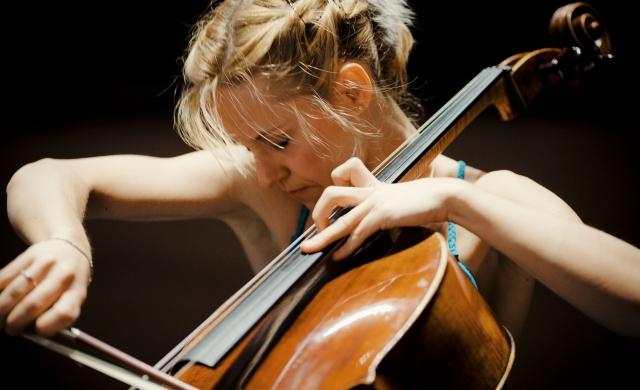
Cello Sheet Music
 "...after using your stuff on a jug band full of instruments, all I can say is Thank You Dr. Duck !..." John Sebastian / Lovin' Spoonful
James Bond Theme Song (banda sinfonica)
James Bond 007 is an imaginary British agent character created by Ian Fleming in 1952. Until his death in 1964, Fleming wrote several novels and small stories around this character.
W.A. Mozart
Wolfgang Amadeus Mozart (German: , full baptismal name Johannes Chrysostomus Wolfgangus Theophilus Mozart (27 January 1756 – 5 December 1791), was a prolific and influential composer of the Classical era. He composed over 600 works, many acknowledged as pinnacles of symphonic, concertante, chamber, piano, operatic, and choral music. He is among the most enduringly popular of classical composers.
Mozart showed prodigious ability from his earliest childhood in Salzburg. Already competent on keyboard and violin, he composed from the age of five and performed before European royalty; at 17 he was engaged as a court musician in Salzburg, but grew restless and traveled in search of a better position, always composing abundantly. While visiting Vienna in 1781, he was dismissed from his Salzburg position. He chose to stay in the capital, where he achieved fame but little financial security. During his final years in Vienna, he composed many of his best-known symphonies, concertos, and operas, and the Requiem. The circumstances of his early death have been much mythologized. He was survived by his wife Constanze and two sons.
Mozart learned voraciously from others, and developed a brilliance and maturity of style that encompassed the light and graceful along with the dark and passionate—the whole informed by a vision of humanity "redeemed through art, forgiven, and reconciled with nature and the absolute." His influence on subsequent Western art music is profound. Beethoven wrote his own early compositions in the shadow of Mozart, of whom Joseph Haydn wrote that "posterity will not see such a talent again in 100 years."
Mozart showed prodigious ability from his earliest childhood in Salzburg. Already competent on keyboard and violin, he composed from the age of five and performed before European royalty; at 17 he was engaged as a court musician in Salzburg, but grew restless and traveled in search of a better position, always composing abundantly. While visiting Vienna in 1781, he was dismissed from his Salzburg position. He chose to stay in the capital, where he achieved fame but little financial security. During his final years in Vienna, he composed many of his best-known symphonies, concertos, and operas, and the Requiem. The circumstances of his early death have been much mythologized. He was survived by his wife Constanze and two sons.
Mozart learned voraciously from others, and developed a brilliance and maturity of style that encompassed the light and graceful along with the dark and passionate—the whole informed by a vision of humanity "redeemed through art, forgiven, and reconciled with nature and the absolute." His influence on subsequent Western art music is profound. Beethoven wrote his own early compositions in the shadow of Mozart, of whom Joseph Haydn wrote that "posterity will not see such a talent again in 100 years."
John Williams
John Towner Williams (born February 8, 1932) is an American composer, conductor, and pianist. In a career that spans six decades, Williams has composed many of the most famous film scores in Hollywood history, including Star Wars, Superman, Home Alone, the first three Harry Potter movies and all but two of Steven Spielberg's feature films including the Indiana Jones series, Schindler's List, E.T. the Extra-Terrestrial, Jurassic Park and Jaws. He also composed the soundtrack for the hit 1960s television series Lost in Space as well as the fanfare of the DreamWorks Pictures' logo.
Williams has composed theme music for four Olympic Games, the NBC Nightly News, the rededication of the Statue of Liberty, and numerous television series and concert pieces. He served as the principal conductor of the Boston Pops Orchestra from 1980 to 1993, and is now the orchestra's laureate conductor.
Williams is a five-time winner of the Academy Award. He has also won four Golden Globe Awards, seven BAFTA Awards and 21 Grammy Awards. With 45 Academy Award nominations, Williams is, together with composer Alfred Newman, the second most nominated person after Walt Disney. He was inducted into the Hollywood Bowl Hall of Fame in 2000, and was a recipient of the Kennedy Center Honors in 2004.
Williams has composed theme music for four Olympic Games, the NBC Nightly News, the rededication of the Statue of Liberty, and numerous television series and concert pieces. He served as the principal conductor of the Boston Pops Orchestra from 1980 to 1993, and is now the orchestra's laureate conductor.
Williams is a five-time winner of the Academy Award. He has also won four Golden Globe Awards, seven BAFTA Awards and 21 Grammy Awards. With 45 Academy Award nominations, Williams is, together with composer Alfred Newman, the second most nominated person after Walt Disney. He was inducted into the Hollywood Bowl Hall of Fame in 2000, and was a recipient of the Kennedy Center Honors in 2004.
Giuseppe Donizetti
Giuseppe Donizetti. Italian musician. Turkey in the 19th century who introduced the first in Turkey and western music band which Mûsikâ-i Humayun's development is the person who provided the largest contribution
Rachmaninoff
Sergei Vasilievich Rachmaninoff (1 April 1873 - 28 March 1943) was a Russian composer, pianist, and conductor. He was one of the finest pianists of his day and, as a composer, the last great representative of Russian late Romanticism in classical music. Early influences of Tchaikovsky, Rimsky-Korsakov and other Russian composers gave way to a thoroughly personal idiom which included a pronounced lyricism, expressive breadth, structural ingenuity and a tonal palette of rich, distinctive orchestral colors.
Understandably, the piano figures prominently in Rachmaninoff's compositional output, either as a solo instrument or as part of an ensemble. He made it a point, however, to use his own skills as a performer to explore fully the expressive possibilities of the instrument. Even in his earliest works, he revealed a sure grasp of idiomatic piano writing and a striking gift for melody. In some of his early orchestral pieces he showed the first signs of a talent for tone painting, which he would perfect in The Isle of the Dead, and he began to show a similar penchant for vocal writing in two early sets of songs, Opp. 4 and 8. Rachmaninoff's masterpiece, however, is his choral symphony The Bells, in which all of his talents are fused and unified.
Rachmaninoff sometimes felt threatened by the success of modernists such as Scriabin and Prokofiev and wondered whether to cease composing even before he left Russia. His musical philosophy was rooted in the Russian spiritual tradition, where the role of the artist was to create beauty and to speak the truth from the depths of his heart. In his last major interview, in 1941, he admitted his music, like Russian music, was a product of his temperament. He said, on another occasion, "The new kind of music seems to create not from the heart but from the head. Its composers think rather than feel. They have not the capacity to make their works exalt—they meditate, protest, analyze, reason, calculate and brood, but they do not exalt."
Understandably, the piano figures prominently in Rachmaninoff's compositional output, either as a solo instrument or as part of an ensemble. He made it a point, however, to use his own skills as a performer to explore fully the expressive possibilities of the instrument. Even in his earliest works, he revealed a sure grasp of idiomatic piano writing and a striking gift for melody. In some of his early orchestral pieces he showed the first signs of a talent for tone painting, which he would perfect in The Isle of the Dead, and he began to show a similar penchant for vocal writing in two early sets of songs, Opp. 4 and 8. Rachmaninoff's masterpiece, however, is his choral symphony The Bells, in which all of his talents are fused and unified.
Rachmaninoff sometimes felt threatened by the success of modernists such as Scriabin and Prokofiev and wondered whether to cease composing even before he left Russia. His musical philosophy was rooted in the Russian spiritual tradition, where the role of the artist was to create beauty and to speak the truth from the depths of his heart. In his last major interview, in 1941, he admitted his music, like Russian music, was a product of his temperament. He said, on another occasion, "The new kind of music seems to create not from the heart but from the head. Its composers think rather than feel. They have not the capacity to make their works exalt—they meditate, protest, analyze, reason, calculate and brood, but they do not exalt."
Astor Piazzolla
Ástor Pantaleón Piazzolla (March 11, 1921 – July 4, 1992) was an Argentine tango composer and bandoneón player. His oeuvre revolutionized the traditional tango into a new style termed nuevo tango, incorporating elements from jazz and classical music. An excellent bandoneonist, he regularly performed his own compositions with different ensembles.
Piazzolla's nuevo tango was distinct from the traditional tango in its incorporation of elements of jazz, its use of extended harmonies and dissonance, its use of counterpoint, and its ventures into extended compositional forms. As Argentine psychoanalyst Carlos Kuri has pointed out, Piazzolla's fusion of tango with this wide range of other recognizable Western musical elements was so successful that it produced a new individual style transcending these influences. It is precisely this success, and individuality, that makes it hard to pin down where particular influences reside in his compositions, but some aspects are clear. The use of the passacaglia technique of a circulating bass line and harmonic sequence, invented and much used in 17th and 18th century baroque music but also central to the idea of jazz "changes", predominates in most of Piazzolla's mature compositions. Another clear reference to the baroque is the often complex and virtuosic counterpoint that sometimes follows strict fugal behavior but more often simply allows each performer in the group to assert his voice. A further technique that emphasises this sense of democracy and freedom among the musicians is improvisation that is borrowed from jazz in concept, but in practice involves a different vocabulary of scales and rhythms that stay within the parameters of the established tango sound-world. Pablo Ziegler has been particularly responsible for developing this aspect of the style both within Piazzolla's groups and since the composer's death.
Piazzolla's nuevo tango was distinct from the traditional tango in its incorporation of elements of jazz, its use of extended harmonies and dissonance, its use of counterpoint, and its ventures into extended compositional forms. As Argentine psychoanalyst Carlos Kuri has pointed out, Piazzolla's fusion of tango with this wide range of other recognizable Western musical elements was so successful that it produced a new individual style transcending these influences. It is precisely this success, and individuality, that makes it hard to pin down where particular influences reside in his compositions, but some aspects are clear. The use of the passacaglia technique of a circulating bass line and harmonic sequence, invented and much used in 17th and 18th century baroque music but also central to the idea of jazz "changes", predominates in most of Piazzolla's mature compositions. Another clear reference to the baroque is the often complex and virtuosic counterpoint that sometimes follows strict fugal behavior but more often simply allows each performer in the group to assert his voice. A further technique that emphasises this sense of democracy and freedom among the musicians is improvisation that is borrowed from jazz in concept, but in practice involves a different vocabulary of scales and rhythms that stay within the parameters of the established tango sound-world. Pablo Ziegler has been particularly responsible for developing this aspect of the style both within Piazzolla's groups and since the composer's death.
Brahms
Johannes Brahms (May 7, 1833 â April 3, 1897) was a German composer of the Romantic period. He was born in Hamburg and in his later years he settled in Vienna, Austria.
Brahms maintained a Classical sense of form and order in his works â in contrast to the opulence of the music of many of his contemporaries. Thus many admirers (though not necessarily Brahms himself) saw him as the champion of traditional forms and "pure music," as opposed to the New German embrace of program music.
Brahms venerated Beethoven: in the composer's home, a marble bust of Beethoven looked down on the spot where he composed, and some passages in his works are reminiscent of Beethoven's style. The main theme of the finale of Brahms's First Symphony is reminiscent of the main theme of the finale of Beethoven's Ninth, and when this resemblance was pointed out to Brahms he replied that any ass â jeder Esel â could see that.
Ein deutsches Requiem was partially inspired by his mother's death in 1865, but also incorporates material from a Symphony he started in 1854, but abandoned following Schumann's suicide attempt. He once wrote that the Requiem "belonged to Schumann". The first movement of this abandoned Symphony was re-worked as the first movement of the First Piano Concerto.
Brahms also loved the Classical composers Mozart and Haydn. He collected first editions and autographs of their works, and edited performing editions. He also studied the music of pre-classical composers, including Giovanni Gabrieli, Johann Adolph Hasse, Heinrich Schütz and especially Johann Sebastian Bach. His friends included leading musicologists, and with Friedrich Chrysander he edited an edition of the works of François Couperin. He looked to older music for inspiration in the arts of strict counterpoint; the themes of some of his works are modelled on Baroque sources, such as Bach's The Art of Fugue in the fugal finale of Cello Sonata No. 1, or the same composer's Cantata No. 150 in the passacaglia theme of the Fourth Symphony's finale.
Brahms maintained a Classical sense of form and order in his works â in contrast to the opulence of the music of many of his contemporaries. Thus many admirers (though not necessarily Brahms himself) saw him as the champion of traditional forms and "pure music," as opposed to the New German embrace of program music.
Brahms venerated Beethoven: in the composer's home, a marble bust of Beethoven looked down on the spot where he composed, and some passages in his works are reminiscent of Beethoven's style. The main theme of the finale of Brahms's First Symphony is reminiscent of the main theme of the finale of Beethoven's Ninth, and when this resemblance was pointed out to Brahms he replied that any ass â jeder Esel â could see that.
Ein deutsches Requiem was partially inspired by his mother's death in 1865, but also incorporates material from a Symphony he started in 1854, but abandoned following Schumann's suicide attempt. He once wrote that the Requiem "belonged to Schumann". The first movement of this abandoned Symphony was re-worked as the first movement of the First Piano Concerto.
Brahms also loved the Classical composers Mozart and Haydn. He collected first editions and autographs of their works, and edited performing editions. He also studied the music of pre-classical composers, including Giovanni Gabrieli, Johann Adolph Hasse, Heinrich Schütz and especially Johann Sebastian Bach. His friends included leading musicologists, and with Friedrich Chrysander he edited an edition of the works of François Couperin. He looked to older music for inspiration in the arts of strict counterpoint; the themes of some of his works are modelled on Baroque sources, such as Bach's The Art of Fugue in the fugal finale of Cello Sonata No. 1, or the same composer's Cantata No. 150 in the passacaglia theme of the Fourth Symphony's finale.
Alan Menken
Alan Menken (born July 22, 1949 in New Rochelle, New York) is an American Broadway and an eight-time Academy Award winning composer and pianist. Menken has collaborated with several renowned lyricists including Howard Ashman (1950-1991), Tim Rice and Stephen Schwartz.
Clifton Williams
Clifton Williams, Jr. was an American composer, pianist, French hornist, mellophonist, music theorist, conductor, and teacher. Williams was known by symphony patrons as a virtuoso French hornist with the symphony orchestras of Baton Rouge, New Orleans, Houston, Oklahoma City, Austin, and San Antonio.
Salomon Jadassohn
Salomon Jadassohn was a German pianist, composer and a renowned teacher of piano and composition at the Leipzig Conservatory
Sergey Rahmaninov
Sergei Vasilievich Rachmaninoff, Russian composer, conductor, pianist. He is one of the greatest pianists and composers of the 20th century. He was the last great composer of Russian romanticism. After the October Revolution in his country, he settled in the USA and became a US citizen
Tchaikovsky
Pyotr Il'yich Tchaikovsky (May 7 1840 â November 6 1893) was a Russian composer of the Romantic era. While not part of the nationalistic music group known as "The Five", Tchaikovsky wrote music which, in the opinion of Harold Schonberg, was distinctly Russian: plangent, introspective, with modally-inflected melody and harmony.
Aesthetically, Tchaikovsky remained open to all aspects of Saint Petersburg musical life. He was impressed by Serov and Balakirev as well as the classical values upheld by the conservatory. Both the progressive and conservative camps in Russian music at the time attempted to win him over. Tchaikovsky charted his compositional course between these two factions, retaining his individuality as a composer as well as his Russian identity. In this he was influenced by the ideals of his teacher Nikolai Rubinstein and Nikolai's brother Anton.
Tchaikovsky's musical cosmopolitanism led him to be favored by many Russian music-lovers over the "Russian" harmonies and styles of Mussorgsky, Borodin and Rimsky-Korsakov.
Nonetheless he frequently adapted Russian traditional melodies and dance forms in his music, which enhanced his success in his home country. The success in St. Petersburg at the premiere of his Third Orchestral Suite may have been due in large part to his concluding the work with a polonaise. He also used a polonaise for the final movement of his Third Symphony.
Aesthetically, Tchaikovsky remained open to all aspects of Saint Petersburg musical life. He was impressed by Serov and Balakirev as well as the classical values upheld by the conservatory. Both the progressive and conservative camps in Russian music at the time attempted to win him over. Tchaikovsky charted his compositional course between these two factions, retaining his individuality as a composer as well as his Russian identity. In this he was influenced by the ideals of his teacher Nikolai Rubinstein and Nikolai's brother Anton.
Tchaikovsky's musical cosmopolitanism led him to be favored by many Russian music-lovers over the "Russian" harmonies and styles of Mussorgsky, Borodin and Rimsky-Korsakov.
Nonetheless he frequently adapted Russian traditional melodies and dance forms in his music, which enhanced his success in his home country. The success in St. Petersburg at the premiere of his Third Orchestral Suite may have been due in large part to his concluding the work with a polonaise. He also used a polonaise for the final movement of his Third Symphony.
Shostakovich
Dmitri Dmitriyevich Shostakovich (25 September 1906 – 9 August 1975) was a Soviet Russian composer and one of the most celebrated composers of the 20th century.
Shostakovich achieved fame in the Soviet Union under the patronage of Leon Trotsky's chief of staff Mikhail Tukhachevsky, but later had a complex and difficult relationship with the Stalinist bureaucracy. In 1936, the government, most probably under orders from Stalin, harshly criticized his opera Lady Macbeth of the Mtsensk District, causing him to withdraw the Fourth Symphony during its rehearsal stages. Shostakovich's music was officially denounced twice, in 1936 and 1948, and was periodically banned. Nevertheless, he also received accolades and state awards and served in the Supreme Soviet of the RSFSR. Despite the official controversy, his works were popular and well received.
Shostakovich achieved fame in the Soviet Union under the patronage of Leon Trotsky's chief of staff Mikhail Tukhachevsky, but later had a complex and difficult relationship with the Stalinist bureaucracy. In 1936, the government, most probably under orders from Stalin, harshly criticized his opera Lady Macbeth of the Mtsensk District, causing him to withdraw the Fourth Symphony during its rehearsal stages. Shostakovich's music was officially denounced twice, in 1936 and 1948, and was periodically banned. Nevertheless, he also received accolades and state awards and served in the Supreme Soviet of the RSFSR. Despite the official controversy, his works were popular and well received.
Alexander Goedicke
Alexander Fyodorovich Goedicke was a Russian composer and pianist. Goedicke was a professor at Moscow Conservatory. With no formal training in composition, he studied piano at the Moscow Conservatory with Galli, Pavel Pabst and Vasily Safonov. Goedicke won the Anton Rubinstein Competition in 1900.
Bach
Johann Sebastian Bach (31 March 1685 – 28 July 1750) was a German composer and organist whose sacred and secular works for choir, orchestra, and solo instruments drew together the strands of the Baroque period and brought it to its ultimate maturity. Although he introduced no new forms, he enriched the prevailing German style with a robust contrapuntal technique, an unrivalled control of harmonic and motivic organisation in composition for diverse musical forces, and the adaptation of rhythms and textures from abroad, particularly Italy and France.
Revered for their intellectual depth and technical and artistic beauty, Bach's works include the Brandenburg concertos; the Goldberg Variations; the English Suites, French Suites, Partitas, and Well-Tempered Clavier; the Mass in B Minor; the St. Matthew Passion; the St. John Passion; The Musical Offering; The Art of Fugue; the Sonatas and Partitas for violin solo; the Cello Suites; more than 200 surviving cantatas; and a similar number of organ works, including the celebrated Toccata and Fugue in D Minor.
While Bach's fame as an organist was great during his lifetime, he was not particularly well-known as a composer. His adherence to Baroque forms and contrapuntal style was considered "old-fashioned" by his contemporaries, especially late in his career when the musical fashion tended towards Rococo and later Classical styles. A revival of interest and performances of his music began early in the 19th century, and he is now widely considered to be one of the greatest composers in the Western tradition.
Revered for their intellectual depth and technical and artistic beauty, Bach's works include the Brandenburg concertos; the Goldberg Variations; the English Suites, French Suites, Partitas, and Well-Tempered Clavier; the Mass in B Minor; the St. Matthew Passion; the St. John Passion; The Musical Offering; The Art of Fugue; the Sonatas and Partitas for violin solo; the Cello Suites; more than 200 surviving cantatas; and a similar number of organ works, including the celebrated Toccata and Fugue in D Minor.
While Bach's fame as an organist was great during his lifetime, he was not particularly well-known as a composer. His adherence to Baroque forms and contrapuntal style was considered "old-fashioned" by his contemporaries, especially late in his career when the musical fashion tended towards Rococo and later Classical styles. A revival of interest and performances of his music began early in the 19th century, and he is now widely considered to be one of the greatest composers in the Western tradition.
Duke Ellington
Edward Kennedy "Duke" Ellington (April 29, 1899 â May 24, 1974) was an American composer, pianist, and bandleader.
Recognized during his life as one of the most influential figures in jazz, if not in all American music, Ellington's reputation has increased since his death, including a special award citation from the Pulitzer Prize Board.
Ellington called his style and sound "American Music" rather than jazz, and liked to describe those who impressed him as "beyond category", including many of the musicians who served with his orchestra, some of whom were themselves considered among the giants of jazz and remained with Ellington's orchestra for decades. While many were noteworthy in their own right, it was Ellington that melded them into one of the most well-known orchestral units in the history of jazz. He often composed specifically for the style and skills of these individuals, such as "Jeep's Blues" for Johnny Hodges, "Concerto for Cootie" ("Do Nothing Till You Hear from Me") for Cootie Williams and "The Mooche" for Tricky Sam Nanton. He also recorded songs written by his bandsmen, such as Juan Tizol's "Caravan" and "Perdido" which brought the "Spanish Tinge" to big-band jazz. After 1941, he frequently collaborated with composer-arranger Billy Strayhorn, who he called his alter-ego.
One of the twentieth century's best-known African-American celebrities, Ellington recorded for many American record companies, and appeared in several films. Ellington and his orchestra toured the United States and Europe regularly before and after World War II. Ellington led his band from 1923 until his death in 1974. His son Mercer Ellington took over the band until his death from cancer in 1996. Paul Ellington, Mercer's youngest son, took over the Orchestra from there and after his mother's passing took over the Estate of Duke and Mercer Ellington.
Recognized during his life as one of the most influential figures in jazz, if not in all American music, Ellington's reputation has increased since his death, including a special award citation from the Pulitzer Prize Board.
Ellington called his style and sound "American Music" rather than jazz, and liked to describe those who impressed him as "beyond category", including many of the musicians who served with his orchestra, some of whom were themselves considered among the giants of jazz and remained with Ellington's orchestra for decades. While many were noteworthy in their own right, it was Ellington that melded them into one of the most well-known orchestral units in the history of jazz. He often composed specifically for the style and skills of these individuals, such as "Jeep's Blues" for Johnny Hodges, "Concerto for Cootie" ("Do Nothing Till You Hear from Me") for Cootie Williams and "The Mooche" for Tricky Sam Nanton. He also recorded songs written by his bandsmen, such as Juan Tizol's "Caravan" and "Perdido" which brought the "Spanish Tinge" to big-band jazz. After 1941, he frequently collaborated with composer-arranger Billy Strayhorn, who he called his alter-ego.
One of the twentieth century's best-known African-American celebrities, Ellington recorded for many American record companies, and appeared in several films. Ellington and his orchestra toured the United States and Europe regularly before and after World War II. Ellington led his band from 1923 until his death in 1974. His son Mercer Ellington took over the band until his death from cancer in 1996. Paul Ellington, Mercer's youngest son, took over the Orchestra from there and after his mother's passing took over the Estate of Duke and Mercer Ellington.
Michael Patti
Michael Patti is a composer, orchestrator and synthestrator of music for film and games in Los Angeles, ..Works with: Azeroth Music Movies: Speechless, Look Away, Love Thy Neighbor Albums: StarCraft II: Legacy of the Void
Eric Whitacre
Eric Edward Whitacre (born January 2, 1970) is an American composer, conductor, and speaker known for his choral, orchestral, and wind ensemble music. In March 2016, he was appointed as Los Angeles Master Chorale's first artist-in-residence at the Walt Disney Concert Hall.
Astor Piazolla
Astor Pantaleón Piazzolla (Spanish pronunciation: , Italian pronunciation: ; March 11, 1921 – July 4, 1992) was an Argentine tango composer, bandoneon player, and arranger. His oeuvre revolutionized the traditional tango into a new style termed nuevo tango, incorporating elements from jazz and classical music. A virtuoso bandoneonist, he regularly performed his own compositions with a variety of ensembles.
In 1992, American music critic Stephen Holden described Piazzolla as "the world's foremost composer of tango music".
In 1992, American music critic Stephen Holden described Piazzolla as "the world's foremost composer of tango music".
Jean Baptiste Breval
Jean-Baptiste Sebastien Bréval was a French cellist and composer. He wrote mostly pieces for his own instrument, and performed many world premières of his own pieces.
Franz Schubert
Franz Peter Schubert (German pronunciation: ; January 31, 1797 – November 19, 1828) was an Austrian composer. He wrote some 600 Lieder, nine symphonies (including the famous "Unfinished Symphony"), liturgical music, operas, some incidental music, and a large body of chamber and solo piano music. He is particularly noted for his original melodic and harmonic writing.
Schubert was born into a musical family, and received formal musical training through much of his childhood. While Schubert had a close circle of friends and associates who admired his work (amongst them the prominent singer Johann Michael Vogl), wide appreciation of his music during his lifetime was limited at best. He was never able to secure adequate permanent employment, and for most of his career he relied on the support of friends and family. He made some money from published works, and occasionally gave private musical instruction. In the last year of his life he began to receive wider acclaim. He died at the age of 31 of "typhoid fever", a diagnosis which was vague at the time; several scholars suspect the real illness was tertiary syphilis.
Interest in Schubert's work increased dramatically in the decades following his death. Composers like Franz Liszt, Robert Schumann and Felix Mendelssohn discovered, collected, and championed his works in the 19th century, as did musicologist Sir George Grove. Franz Schubert is now widely considered to be one of the greatest composers in the Western tradition.
Schubert was born into a musical family, and received formal musical training through much of his childhood. While Schubert had a close circle of friends and associates who admired his work (amongst them the prominent singer Johann Michael Vogl), wide appreciation of his music during his lifetime was limited at best. He was never able to secure adequate permanent employment, and for most of his career he relied on the support of friends and family. He made some money from published works, and occasionally gave private musical instruction. In the last year of his life he began to receive wider acclaim. He died at the age of 31 of "typhoid fever", a diagnosis which was vague at the time; several scholars suspect the real illness was tertiary syphilis.
Interest in Schubert's work increased dramatically in the decades following his death. Composers like Franz Liszt, Robert Schumann and Felix Mendelssohn discovered, collected, and championed his works in the 19th century, as did musicologist Sir George Grove. Franz Schubert is now widely considered to be one of the greatest composers in the Western tradition.
Martin O'Donnell
Martin "Marty" O'Donnell (born May 1, 1955) is an award-winning American composer known for his work on video game developer Bungie's series, such as Myth, Oni, and most predominately Halo. O'Donnell collaborates with his musical colleague Michael Salvatori for many of the scores; he has also directed voice talent and sound design for the Halo trilogy, and is currently Bungie's Audio Lead.
O'Donnell began his music career writing television and radio jingles as well as scoring for radio and film. O'Donnell moved to composing video game music when his company, TotalAudio, did the sound design for the 1997 title Riven. After producing the music for Myth II, Bungie contracted O'Donnell to work on their other projects, including Oni and the code-named project that would become Halo: Combat Evolved. O'Donnell ended up joining the Bungie staff only ten days before the studio was bought by Microsoft, and has been the audio director for all Bungie projects since.
O'Donnell's score to the Halo trilogy has been called iconic, and the commercial soundtrack release of the music to Halo 2 became the best-selling video game soundtrack of all time. His most recently released work is the music for Halo: Reach, released digitally on September 14, 2010.
O'Donnell began his music career writing television and radio jingles as well as scoring for radio and film. O'Donnell moved to composing video game music when his company, TotalAudio, did the sound design for the 1997 title Riven. After producing the music for Myth II, Bungie contracted O'Donnell to work on their other projects, including Oni and the code-named project that would become Halo: Combat Evolved. O'Donnell ended up joining the Bungie staff only ten days before the studio was bought by Microsoft, and has been the audio director for all Bungie projects since.
O'Donnell's score to the Halo trilogy has been called iconic, and the commercial soundtrack release of the music to Halo 2 became the best-selling video game soundtrack of all time. His most recently released work is the music for Halo: Reach, released digitally on September 14, 2010.
Chess
Chess is a musical with lyrics by Tim Rice and music by Björn Ulvaeus and Benny Andersson, formerly of ABBA. The story involves a romantic triangle between two players in a world chess championship, and a woman who manages one and falls in love with the other. Although the protagonists were not intended to represent any specific individuals, the characters’ personalities are loosely based on those of Victor Korchnoi and Bobby Fischer.
Following the pattern of Jesus Christ Superstar and Evita, a concept album of Chess was recorded in 1984, and generated a number of hit singles. The first theatrical version of Chess opened in London's West End in 1986 and played for three years. A much-altered production premiered on Broadway in 1988, but most critics gave it a poor reception, and it failed to attract large audiences. In spite of this failure in the United States, Chess, like Candide and other "cult" musicals, is frequently revised for new productions, many of which try to merge elements from both the London and Broadway versions.
Chess came seventh in a BBC Radio 2 listener poll of the United Kingdom's "Number One Essential Musicals."
Following the pattern of Jesus Christ Superstar and Evita, a concept album of Chess was recorded in 1984, and generated a number of hit singles. The first theatrical version of Chess opened in London's West End in 1986 and played for three years. A much-altered production premiered on Broadway in 1988, but most critics gave it a poor reception, and it failed to attract large audiences. In spite of this failure in the United States, Chess, like Candide and other "cult" musicals, is frequently revised for new productions, many of which try to merge elements from both the London and Broadway versions.
Chess came seventh in a BBC Radio 2 listener poll of the United Kingdom's "Number One Essential Musicals."
Hisaishi Jou
Mamoru Fujisawa (藤澤 守 Fujisawa Mamoru?), known professionally as Joe Hisaishi (久石 譲 Hisaishi Jō?, born December 6, 1950), is a composer and director known for over 100 film scores and solo albums dating back to 1981.
While possessing a stylistically distinct sound, Hisaishi's music has been known to explore and incorporate different genres, including minimalist, experimental electronic, European classical, and Japanese classical. Lesser known are the other musical roles he plays; he is also a typesetter, author, arranger, and head of an orchestra.
He is best known for his work with animator Hayao Miyazaki, having composed scores for many of his films including Nausicaä of the Valley of the Wind (1984), Castle in the Sky (1986), My Neighbor Totoro (1988), Kiki's Delivery Service (1989), Porco Rosso (1992), Princess Mononoke (1997), Spirited Away (2001), Howl's Moving Castle (2004) and Ponyo on the Cliff by the Sea (2008). He is also recognized for the soundtracks he has provided for filmmaker 'Beat' Takeshi Kitano, including A Scene at the Sea (1991), Dolls (2002), Kikujiro (1999), Hana-bi (1997), Kids Return (1996), Ocean Heaven (2010) and Sonatine (1993).
While possessing a stylistically distinct sound, Hisaishi's music has been known to explore and incorporate different genres, including minimalist, experimental electronic, European classical, and Japanese classical. Lesser known are the other musical roles he plays; he is also a typesetter, author, arranger, and head of an orchestra.
He is best known for his work with animator Hayao Miyazaki, having composed scores for many of his films including Nausicaä of the Valley of the Wind (1984), Castle in the Sky (1986), My Neighbor Totoro (1988), Kiki's Delivery Service (1989), Porco Rosso (1992), Princess Mononoke (1997), Spirited Away (2001), Howl's Moving Castle (2004) and Ponyo on the Cliff by the Sea (2008). He is also recognized for the soundtracks he has provided for filmmaker 'Beat' Takeshi Kitano, including A Scene at the Sea (1991), Dolls (2002), Kikujiro (1999), Hana-bi (1997), Kids Return (1996), Ocean Heaven (2010) and Sonatine (1993).
Matthew Pierce
Matthew Pierce - Composer Violinist. Composer-Violinist Matthew Pierce is celebrated for his new classical scores commissioned by major American ballet companies. His work has been performed around the country and around the world at City Center in New York, Covent Garden in London and the Palais Garnier in Paris.
Pierre Boulez
ierre Louis Joseph Boulez CBE was a French composer, conductor, writer and creator of musical institutions. He was one of the dominant figures ..
Nyan Cat Theme Strings
String quartet of the song from the Nyan cat internet meme. It consists of Two Violins playing an octave duet. A Viola playing
Charles Gounod
Charles-François Gounod (/ɡuːˈnoʊ/; French: ; 17 June 1818 – 17 or 18 October 1893) was a French composer, best known for his Ave Maria, based on a work by Bach, as well as his opera Faust. Another opera by Gounod that is still performed today is Roméo et Juliette.
Gounod died at Saint-Cloud in 1893, after a final revision of his twelve operas. His funeral took place ten days later at the Church of the Madeleine, with Camille Saint-Saëns playing the organ and Gabriel Fauré conducting. He was buried at the Cimetière d'Auteuil in Paris.
Gounod died at Saint-Cloud in 1893, after a final revision of his twelve operas. His funeral took place ten days later at the Church of the Madeleine, with Camille Saint-Saëns playing the organ and Gabriel Fauré conducting. He was buried at the Cimetière d'Auteuil in Paris.
Rylan Gajek
Canadian cellist Rylan Gajek Leonard has won praise as a versatile and mature musician from audiences and juries. An avid chamber musician and recitalist, .
Hans Zimmer
Hans Florian Zimmer (born September 12, 1957) is a German film score composer and music producer. He has composed music for over 100 films, including Hollywood blockbusters such as the Pirates of the Caribbean series, Gladiator, The Lion King, The Da Vinci Code and The Dark Knight.
Zimmer spent the early part of his career in the United Kingdom before moving to the United States. He is the head of the film music division at DreamWorks studios, and works with other composers through the company which he founded, Remote Control Productions. His work is notable for integrating electronic music sounds with traditional orchestral arrangements.
Zimmer spent the early part of his career in the United Kingdom before moving to the United States. He is the head of the film music division at DreamWorks studios, and works with other composers through the company which he founded, Remote Control Productions. His work is notable for integrating electronic music sounds with traditional orchestral arrangements.
apocaliptica
Apocalyptica is a Finnish symphonic metal band from Helsinki, Finland, formed in 1993. The band is composed of classically trained cellists Eicca Toppinen, Paavo Lötjönen, and Perttu Kivilaakso (all three of whom are graduates of the Sibelius Academy in Helsinki), drummer Mikko Sirén, and vocalist Franky Perez. Originally a Metallica classical tribute band, the band eventually adopted a neoclassical metal style without the use of conventional guitars. They have sold over four million albums to date.
Fall Out Boy
Fall Out Boy is an American rock band from Wilmette, Illinois, (a suburb of Chicago) that formed in 2001. The band consists of Patrick Stump (lead vocals, rhythm guitar, primary composer), Pete Wentz (bass guitar, backing vocals, primary lyricist), Joe Trohman (lead guitar), and Andy Hurley (drums, percussion).
Fall Out Boy has won several awards for its album From Under the Cork Tree. Released in 2005, the album has achieved double platinum status after selling more than 2.5 million albums in the United States. In support of the album, Fall Out Boy headlined tours in 2005 and the year before 2007 in the United States, Canada, Japan, and Europe.
In February 2007, the band released Infinity on High to major chart success, reaching #1 on the Billboard 200 and selling 260,000 copies in its first week. The first single, "This Ain't a Scene, It's an Arms Race", reached #1 on the Pop 100 and #2 on the Billboard Hot 100. To promote the album, the band performed at the Live Earth concerts July 7, headlined the Honda Civic Tour through mid-2007, and the band performed at the MTV Video Music Awards on September 9. The band has toured numerous times, most recently on the Young Wild Things Tour with the Plain White T's, Gym Class Heroes, and Cute Is What We Aim For.
Fall Out Boy has won several awards for its album From Under the Cork Tree. Released in 2005, the album has achieved double platinum status after selling more than 2.5 million albums in the United States. In support of the album, Fall Out Boy headlined tours in 2005 and the year before 2007 in the United States, Canada, Japan, and Europe.
In February 2007, the band released Infinity on High to major chart success, reaching #1 on the Billboard 200 and selling 260,000 copies in its first week. The first single, "This Ain't a Scene, It's an Arms Race", reached #1 on the Pop 100 and #2 on the Billboard Hot 100. To promote the album, the band performed at the Live Earth concerts July 7, headlined the Honda Civic Tour through mid-2007, and the band performed at the MTV Video Music Awards on September 9. The band has toured numerous times, most recently on the Young Wild Things Tour with the Plain White T's, Gym Class Heroes, and Cute Is What We Aim For.
Mitsumune Shinkichi
Shinkichi Mitsumune (光宗 信吉 Mitsumune Shinkichi) (born October 8, 1963) is a Japanese composer who writes music primarily for anime.
Mitsumune is a native of Fukuoka City in Fukuoka Prefecture and a graduate of Rikkyo University with a degree in business. He started studying music at the age of 4. After graduating from college, he toured music festivals across Japan as a keyboardist for a Marine band, and later for musicians such as Yukie Nishimura. Starting in 1995, he lent his skills to composing anime and movie scores with a full orchestra.
Mitsumune is a native of Fukuoka City in Fukuoka Prefecture and a graduate of Rikkyo University with a degree in business. He started studying music at the age of 4. After graduating from college, he toured music festivals across Japan as a keyboardist for a Marine band, and later for musicians such as Yukie Nishimura. Starting in 1995, he lent his skills to composing anime and movie scores with a full orchestra.
Haydn
Franz Joseph Haydn (March 31, 1732 – May 31, 1809) was one of the most prominent composers of the classical period, and is called by some the "Father of the Symphony" and "Father of the String Quartet".
A life-long resident of Austria, Haydn spent most of his career as a court musician for the wealthy Hungarian Esterházy family on their remote estate. Isolated from other composers and trends in music until the later part of his long life, he was, as he put it, "forced to become original".
Although Haydn is still often called "Franz Joseph Haydn", the composer did not use the name "Franz" during his lifetime and this misnomer is avoided by modern scholars and historians. Joseph Haydn was the brother of Michael Haydn, himself a highly regarded composer, and Johann Evangelist Haydn, a tenor.
A central characteristic of Haydn's music is the development of larger structures out of very short, simple musical motifs, often derived from standard accompanying figures. The music is often quite formally concentrated, and the important musical events of a movement can unfold rather quickly.
Haydn's work was central to the development of what came to be called sonata form. His practice, however, differed in some ways from that of Mozart and Beethoven, his younger contemporaries who likewise excelled in this form of composition. Haydn was particularly fond of the so-called "monothematic exposition", in which the music that establishes the dominant key is similar or identical to the opening theme. Haydn also differs from Mozart and Beethoven in his recapitulation sections, where he often rearranges the order of themes compared to the exposition and uses extensive thematic development.
Perhaps more than any other composer's, Haydn's music is known for its humour. The most famous example is the sudden loud chord in the slow movement of his "Surprise" symphony; Haydn's many other musical jokes include numerous false endings (e.g., in the quartets Op. 33 No. 2 and Op. 50 No. 3), and the remarkable rhythmic illusion placed in the trio section of the third movement of Op. 50 No. 1.
A life-long resident of Austria, Haydn spent most of his career as a court musician for the wealthy Hungarian Esterházy family on their remote estate. Isolated from other composers and trends in music until the later part of his long life, he was, as he put it, "forced to become original".
Although Haydn is still often called "Franz Joseph Haydn", the composer did not use the name "Franz" during his lifetime and this misnomer is avoided by modern scholars and historians. Joseph Haydn was the brother of Michael Haydn, himself a highly regarded composer, and Johann Evangelist Haydn, a tenor.
A central characteristic of Haydn's music is the development of larger structures out of very short, simple musical motifs, often derived from standard accompanying figures. The music is often quite formally concentrated, and the important musical events of a movement can unfold rather quickly.
Haydn's work was central to the development of what came to be called sonata form. His practice, however, differed in some ways from that of Mozart and Beethoven, his younger contemporaries who likewise excelled in this form of composition. Haydn was particularly fond of the so-called "monothematic exposition", in which the music that establishes the dominant key is similar or identical to the opening theme. Haydn also differs from Mozart and Beethoven in his recapitulation sections, where he often rearranges the order of themes compared to the exposition and uses extensive thematic development.
Perhaps more than any other composer's, Haydn's music is known for its humour. The most famous example is the sudden loud chord in the slow movement of his "Surprise" symphony; Haydn's many other musical jokes include numerous false endings (e.g., in the quartets Op. 33 No. 2 and Op. 50 No. 3), and the remarkable rhythmic illusion placed in the trio section of the third movement of Op. 50 No. 1.
Paul Hindemith
Paul Hindemith (16 November 1895 – 28 December 1963) was a German composer, violist, violinist, teacher, music theorist and conductor.
Muse
Muse are a British rock band formed in Teignmouth, Devon, United Kingdom in 1994 under the alias of Rocket Baby Dolls. The band comprises Matthew Bellamy (vocals, guitar and piano), Christopher Wolstenholme (bass guitar and backing vocals) and Dominic Howard (drums and percussion). Muse's style can be considered as a mixture of many musical genres, most notably alternative rock, classical music and electronica. Muse are known best for their energetic and visually dazzling live performances and on June 16th & 17th, 2007 became the first band to sell out the newly built Wembley Stadium in London. Muse have released four studio albums with their first, Showbiz, released in 1999, followed by Origin of Symmetry in 2001 and Absolution in 2003. The most recent, Black Holes & Revelations (2006), was also the most critically acclaimed, garnering the band a Mercury Prize nomination and a third place finish in the NME Albums of the Year list for 2006. Muse have won various awards throughout their career including 5 MTV Europe Music Awards, 5 Q Awards, 4 NME Awards and 2 Brit awards.
Celine Dion
Céline Marie Claudette Dion (born March 30, 1968 in Charlemagne, Quebec) is a Canadian singer, and occasional songwriter and actress.
Dion had first gained international recognition in the 1980s by winning both the 1982 Yamaha World Popular Song Festival and the 1988 Eurovision Song Contest.
Dion's music has been influenced by genres ranging from rock and R&B to gospel and classical, and while her releases have often received mixed critical reception, she is renowned for her technically skilled and powerful vocals.
Dion had first gained international recognition in the 1980s by winning both the 1982 Yamaha World Popular Song Festival and the 1988 Eurovision Song Contest.
Dion's music has been influenced by genres ranging from rock and R&B to gospel and classical, and while her releases have often received mixed critical reception, she is renowned for her technically skilled and powerful vocals.
Apocalyptica
Apocalyptica is a Finnish cello metal band, composed of classically trained cellists and, since 2005, a drummer. Three of the cellists are graduates of the Sibelius Academy in Helsinki, Finland. Their music features elements from classical music, neo-classical metal, thrash metal, and symphonic metal.
Andrew Lloyd Webber
Andrew Lloyd Webber, Baron Lloyd-Webber (born 22 March 1948) is an English composer of musical theatre, the elder son of organist William Lloyd Webber and brother of the cellist Julian Lloyd Webber. Lloyd Webber started composing at the age of six, and published his first piece at the age of nine.
Lloyd Webber has achieved great popular success, with several musicals that have run for more than a decade both in the West End and on Broadway. He has composed 13 musicals, a song cycle, a set of variations, two film scores, and a Latin Requiem Mass. He has also gained a number of honours, including a knighthood in 1992, followed by a peerage from the British Government for services to Music, seven Tony Awards (and 40 nominations), three Grammy Awards (with an additional 60 nominations), an Academy Award (two other nominations), seven Olivier Awards (with 100 nominations), a Golden Globe, and the Kennedy Center Honors in 2006. Several of his songs, notably "The Music of the Night" from The Phantom of the Opera, "I Don't Know How to Love Him" from Jesus Christ Superstar, "Don't Cry for Me, Argentina" from Evita, "Any Dream Will Do" from Joseph and the Amazing Technicolor Dreamcoat and "Memory" from Cats have been widely recorded and were hits outside of their parent musicals. His company, the Really Useful Group, is one of the largest theatre operators in London.
Producers in several parts of the UK have staged productions, including national tours, of Lloyd Webber's musicals under licence from the Really Useful Group. According to britishhitsongwriters.com, he is the one hundredth most successful songwriter in U.K. singles chart history, based on weeks that his compositions have spent on the chart.
Lloyd Webber has achieved great popular success, with several musicals that have run for more than a decade both in the West End and on Broadway. He has composed 13 musicals, a song cycle, a set of variations, two film scores, and a Latin Requiem Mass. He has also gained a number of honours, including a knighthood in 1992, followed by a peerage from the British Government for services to Music, seven Tony Awards (and 40 nominations), three Grammy Awards (with an additional 60 nominations), an Academy Award (two other nominations), seven Olivier Awards (with 100 nominations), a Golden Globe, and the Kennedy Center Honors in 2006. Several of his songs, notably "The Music of the Night" from The Phantom of the Opera, "I Don't Know How to Love Him" from Jesus Christ Superstar, "Don't Cry for Me, Argentina" from Evita, "Any Dream Will Do" from Joseph and the Amazing Technicolor Dreamcoat and "Memory" from Cats have been widely recorded and were hits outside of their parent musicals. His company, the Really Useful Group, is one of the largest theatre operators in London.
Producers in several parts of the UK have staged productions, including national tours, of Lloyd Webber's musicals under licence from the Really Useful Group. According to britishhitsongwriters.com, he is the one hundredth most successful songwriter in U.K. singles chart history, based on weeks that his compositions have spent on the chart.
Theme song by Dennis Wilson
For other people named Dennis Wilson, see Dennis Wilson (disambiguation).
Dennis Wilson
Dennis Wilson 1971 cropped.jpg
Wilson in a 1971 promotional shot for the film Two-Lane Blacktop
Background information
Birth name Dennis Carl Wilson
Born December 4, 1944
Inglewood, California, U.S.
Origin Hawthorne, California, U.S.
Died December 28, 1983 (aged 39)
Marina del Rey, California, U.S.
Genres
Rockpop
Occupation(s)
Musiciansongwriterproduceractor
Instruments
Vocalsdrumskeyboards
Years active 1961–1983
Labels
CandixCapitolBrotherRepriseCaribou
Associated acts
The Beach BoysDaryl Dragonthe Four SpeedsGregg Jakobson
Dennis Carl Wilson (December 4, 1944 – December 28, 1983) was an American musician, singer, songwriter, and actor, who co-founded the Beach Boys. He is best remembered as their drummer and as the middle brother of bandmates Brian and Carl Wilson. Dennis was the only true surfer in the Beach Boys, and his personal life exemplified the "California Myth" that the band's early songs often celebrated. He was also known for his brief association with Charles Manson, a songwriter later convicted of several murders, and for co-starring in the 1971 film Two-Lane Blacktop.
Wilson served mainly on drums and backing vocals for the Beach Boys, and contrary to popular belief, his playing can be heard on many of the group's hits. He originally had few lead vocals on the band's songs, but starting with their 1968 album Friends, his prominence as a singer-songwriter increased. Unlike Brian's music, Dennis' is characterized for reflecting his "edginess" and "little of his happy charm". His original songs for the group included "Little Bird" (1968), "Forever" (1970), and "Slip On Through" (1970). Friends and biographers also say that Wilson was an uncredited writer on "You Are So Beautiful", a hit for Joe Cocker in 1974.
During his final years, Wilson struggled with substance addictions that contributed to tensions with his bandmates. His only solo album, Pacific Ocean Blue (1977), was released to warm reviews and moderate sales." Sessions for a follow-up, Bambu, disintegrated before his death. In 1988, Wilson was inducted into the Rock and Roll Hall of Fame as a member of the Beach Boys. He died from drowning at the age of 39 in 1983.
Dennis Wilson
Dennis Wilson 1971 cropped.jpg
Wilson in a 1971 promotional shot for the film Two-Lane Blacktop
Background information
Birth name Dennis Carl Wilson
Born December 4, 1944
Inglewood, California, U.S.
Origin Hawthorne, California, U.S.
Died December 28, 1983 (aged 39)
Marina del Rey, California, U.S.
Genres
Rockpop
Occupation(s)
Musiciansongwriterproduceractor
Instruments
Vocalsdrumskeyboards
Years active 1961–1983
Labels
CandixCapitolBrotherRepriseCaribou
Associated acts
The Beach BoysDaryl Dragonthe Four SpeedsGregg Jakobson
Dennis Carl Wilson (December 4, 1944 – December 28, 1983) was an American musician, singer, songwriter, and actor, who co-founded the Beach Boys. He is best remembered as their drummer and as the middle brother of bandmates Brian and Carl Wilson. Dennis was the only true surfer in the Beach Boys, and his personal life exemplified the "California Myth" that the band's early songs often celebrated. He was also known for his brief association with Charles Manson, a songwriter later convicted of several murders, and for co-starring in the 1971 film Two-Lane Blacktop.
Wilson served mainly on drums and backing vocals for the Beach Boys, and contrary to popular belief, his playing can be heard on many of the group's hits. He originally had few lead vocals on the band's songs, but starting with their 1968 album Friends, his prominence as a singer-songwriter increased. Unlike Brian's music, Dennis' is characterized for reflecting his "edginess" and "little of his happy charm". His original songs for the group included "Little Bird" (1968), "Forever" (1970), and "Slip On Through" (1970). Friends and biographers also say that Wilson was an uncredited writer on "You Are So Beautiful", a hit for Joe Cocker in 1974.
During his final years, Wilson struggled with substance addictions that contributed to tensions with his bandmates. His only solo album, Pacific Ocean Blue (1977), was released to warm reviews and moderate sales." Sessions for a follow-up, Bambu, disintegrated before his death. In 1988, Wilson was inducted into the Rock and Roll Hall of Fame as a member of the Beach Boys. He died from drowning at the age of 39 in 1983.
Faye Wong
Faye Wong (王菲) (born August 8, 1969) is a Chinese singer, songwriter, actress and model. She is an icon popular in mainland China, Taiwan, Hong Kong, Singapore, Malaysia, Indonesia, Japan and to some extent in the West. She came to fame in the early 1990s while she was based in Hong Kong, returning to Beijing around 1996.
Her fan base has grown so large and devoted that media in Hong Kong, Taiwan, and mainland China often place the title tiānhòu (天后, meaning Queen of Heaven) before her name, while Japanese fans call her "Diva of Asia". An intensely private artist, she is one of the very few singers widely popular on both sides of the Taiwan Straits, despite her apparent nonchalance toward the media.
According to Guinness World Records, Faye Wong had sold 9.7 million copies of her albums as of March 2000, giving her the title of Best Selling Canto-Pop Female.
She has acted in several TV shows and films, most memorably in Wong Kar-wai's Chungking Express, a role that won her "Best Actress" award at the 1994 Stockholm International Film Festival, and in 2046. She is known to many Final Fantasy fans for her Final Fantasy VIII theme "Eyes On Me", and has also been the spokeswoman of brands such as Head & Shoulders shampoo and Pepsi-Cola. Faye Wong has also graced the covers of Vogue Taiwan, Elle and Marie Claire Hong Kong, and has had spreads in Japanese Elle and other major Asian Fashion magazines. In 2008, Wong was named "Asia's sexiest vegetarian woman" by People for the Ethical Treatment of Animals (PETA).
Her fan base has grown so large and devoted that media in Hong Kong, Taiwan, and mainland China often place the title tiānhòu (天后, meaning Queen of Heaven) before her name, while Japanese fans call her "Diva of Asia". An intensely private artist, she is one of the very few singers widely popular on both sides of the Taiwan Straits, despite her apparent nonchalance toward the media.
According to Guinness World Records, Faye Wong had sold 9.7 million copies of her albums as of March 2000, giving her the title of Best Selling Canto-Pop Female.
She has acted in several TV shows and films, most memorably in Wong Kar-wai's Chungking Express, a role that won her "Best Actress" award at the 1994 Stockholm International Film Festival, and in 2046. She is known to many Final Fantasy fans for her Final Fantasy VIII theme "Eyes On Me", and has also been the spokeswoman of brands such as Head & Shoulders shampoo and Pepsi-Cola. Faye Wong has also graced the covers of Vogue Taiwan, Elle and Marie Claire Hong Kong, and has had spreads in Japanese Elle and other major Asian Fashion magazines. In 2008, Wong was named "Asia's sexiest vegetarian woman" by People for the Ethical Treatment of Animals (PETA).
Gustav Schreck
Gustav Ernst Schreck (8 September 1849, Zeulenroda-Triebes – 22 January 1918, Leipzig) was a German composer and music educator. He was the cantor of the Thomanerchor from 1893 to 1918.
Howard Shore
Howard Leslie Shore (born October 18, 1946) is a Canadian composer, notable for his film scores. He has composed the scores for over 40 films, most notably the scores for The Lord of the Rings film trilogy, for which he won three Academy Awards. He is also a consistent collaborator with director David Cronenberg, having scored all but one of his films since 1979. Shore has also worked with Martin Scorsese, Jonathan Demme, David Fincher and many other filmakers.
He has also composed a few concert works including one opera, The Fly, based on the plot (though not his score) of Cronenberg's 1986 film premiered at the Théâtre du Châtelet in Paris on 2 July 2008., a short piece Fanfare for the Wanamaker Organ and the Philadelphia Orchestra, and a short overture for the Swiss 21st Century Symphony Orchestra.
Shore is a three-time winner of the Academy Award, and has also won two Golden Globe Awards and four Grammy Awards. He is the uncle of film composer Ryan Shore.
He has also composed a few concert works including one opera, The Fly, based on the plot (though not his score) of Cronenberg's 1986 film premiered at the Théâtre du Châtelet in Paris on 2 July 2008., a short piece Fanfare for the Wanamaker Organ and the Philadelphia Orchestra, and a short overture for the Swiss 21st Century Symphony Orchestra.
Shore is a three-time winner of the Academy Award, and has also won two Golden Globe Awards and four Grammy Awards. He is the uncle of film composer Ryan Shore.
Gluck
Christoph Willibald Ritter von Gluck (born 2 July 1714 Erasbach, Upper Palatinate; died 15 November 1787 in Vienna) was a composer of the 18th century, most noted for his operatic works. After many years at the Habsburg court at Vienna, Gluck brought about the practical reform of opera's dramaturgical practices that many intellectuals had been campaigning for over the years. With a series of radical new works in the 1760s, among them Orfeo ed Euridice and Alceste, he broke the stranglehold that Metastasian opera seria had enjoyed for much of the century.
The strong influence of French opera in these works encouraged Gluck to move to Paris, which he did in November 1773. Fusing the traditions of Italian opera and the French national genre into a new synthesis, Gluck wrote eight operas for the Parisian stages. One of the last of these, Iphigénie en Tauride, was a great success and is generally acknowledged to be his finest work. Though extremely popular and widely credited with bringing about a revolution in French opera, Gluck's mastery of the Parisian operatic scene was never absolute, and after the poor reception of his Echo et Narcisse, he left Paris in disgust and returned to Vienna to live out the remainder of his life.
The strong influence of French opera in these works encouraged Gluck to move to Paris, which he did in November 1773. Fusing the traditions of Italian opera and the French national genre into a new synthesis, Gluck wrote eight operas for the Parisian stages. One of the last of these, Iphigénie en Tauride, was a great success and is generally acknowledged to be his finest work. Though extremely popular and widely credited with bringing about a revolution in French opera, Gluck's mastery of the Parisian operatic scene was never absolute, and after the poor reception of his Echo et Narcisse, he left Paris in disgust and returned to Vienna to live out the remainder of his life.