 Sheets Daily is a daily updated site for those who wants to access popular free sheet music easily,
letting them download the sheet music for free for trial purposes.
It's completely free to download and try the listed sheet music, but you have to delete the files after 24 hours of trial.
Don't forget, if you like the piece of music you have just learned playing,
treat the artist with respect, and go buy the original sheet music.
Sheets Daily is a daily updated site for those who wants to access popular free sheet music easily,
letting them download the sheet music for free for trial purposes.
It's completely free to download and try the listed sheet music, but you have to delete the files after 24 hours of trial.
Don't forget, if you like the piece of music you have just learned playing,
treat the artist with respect, and go buy the original sheet music.
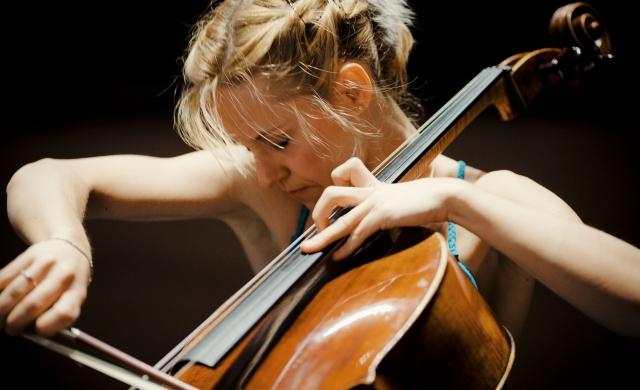
Cello Sheet Music
 ".. a leased beach house in Malibu ... all the doors wide open on a spectacular July day probably in 1975 ... soaking wet ... thinking the world is a wonderful place to be... with an acoustic 12 string ... those chords just oozed out." Don Felder / Eagles
Deep Purple
Deep Purple are an English rock band formed in Hertford in 1968. Along with Led Zeppelin and Black Sabbath, they are considered to be among the pioneers of heavy metal and modern hard rock, although some band members have tried not to categorise themselves as any one genre. The band also incorporated classical music, blues-rock, pop and progressive rock elements. They were once listed by the Guinness Book of World Records as the world's loudest band, and have sold over 100 million albums worldwide. Deep Purple were ranked #22 on VH1's Greatest Artists of Hard Rock programme.
The band have gone through many line-up changes and an eight-year hiatus (1976–84). The 1968–76 line-ups are commonly labeled Mark I, II, III and IV. Their second and most commercially successful line-up featured Ian Gillan (vocals), Ritchie Blackmore (guitar), Jon Lord (keyboards), Roger Glover (bass) and Ian Paice (drums). This line-up was active from 1969 to 1973 and was revived from 1984 to 1989 and again in 1993, before the rift between Blackmore and other members became unbridgeable. The current line-up including guitarist Steve Morse has been much more stable, though Lord's retirement in 2002 has left Paice as the only original member.
The band have gone through many line-up changes and an eight-year hiatus (1976–84). The 1968–76 line-ups are commonly labeled Mark I, II, III and IV. Their second and most commercially successful line-up featured Ian Gillan (vocals), Ritchie Blackmore (guitar), Jon Lord (keyboards), Roger Glover (bass) and Ian Paice (drums). This line-up was active from 1969 to 1973 and was revived from 1984 to 1989 and again in 1993, before the rift between Blackmore and other members became unbridgeable. The current line-up including guitarist Steve Morse has been much more stable, though Lord's retirement in 2002 has left Paice as the only original member.
Alan Menken
Alan Menken (born July 22, 1949 in New Rochelle, New York) is an American Broadway and an eight-time Academy Award winning composer and pianist. Menken has collaborated with several renowned lyricists including Howard Ashman (1950-1991), Tim Rice and Stephen Schwartz.
Henry Mancini
Henry Mancini (April 16, 1924 – June 14, 1994) was an American composer, conductor and arranger. He is remembered particularly for being a composer of film and television scores. Mancini also won a record number of Grammy awards, including a Grammy Lifetime Achievement Award in 1995. His best-known works are the jazz-idiom theme to The Pink Panther film series ("The Pink Panther Theme"), the Peter Gunn Theme (from the so-named series) and "Moon River".
Mancini was nominated for an unprecedented 72 Grammys, winning 20. Additionally he was nominated for 18 Academy Awards, winning four. He also won a Golden Globe Award and was nominated for two Emmys.
Mancini won a total of four Oscars for his music in the course of his career. He was first nominated for an Academy Award in 1955 for his original score of The Glenn Miller Story, on which he collaborated with Joseph Gershenson. He lost out to Adolph Deutsch and Saul Chaplin's Seven Brides for Seven Brothers. In 1962 he was nominated in the Best Music, Original Song category for "Bachelor in Paradise" from the film of the same name, in collaboration with lyricist Mack David. That song did not win. However, Mancini did receive two Oscars that year: one in the same category, for the song "Moon River" (shared with lyricist Johnny Mercer), and one for "Best Music, Scoring of a Dramatic or Comedy Picture" for Breakfast at Tiffany's. The following year, he and Mercer took another Best Song award for "Days of Wine and Roses," another eponymous theme song. His next eleven nominations went for naught, but he finally garnered one last statuette working with lyricist Leslie Bricusse on the score for Victor/Victoria, which won the "Best Music, Original Song Score and Its Adaptation or Best Adaptation Score" award for 1983. All three of the films for which he won were directed by Blake Edwards. His score for Victor/Victoria was adapted for the 1995 Broadway musical of the same name.
Mancini was nominated for an unprecedented 72 Grammys, winning 20. Additionally he was nominated for 18 Academy Awards, winning four. He also won a Golden Globe Award and was nominated for two Emmys.
Mancini won a total of four Oscars for his music in the course of his career. He was first nominated for an Academy Award in 1955 for his original score of The Glenn Miller Story, on which he collaborated with Joseph Gershenson. He lost out to Adolph Deutsch and Saul Chaplin's Seven Brides for Seven Brothers. In 1962 he was nominated in the Best Music, Original Song category for "Bachelor in Paradise" from the film of the same name, in collaboration with lyricist Mack David. That song did not win. However, Mancini did receive two Oscars that year: one in the same category, for the song "Moon River" (shared with lyricist Johnny Mercer), and one for "Best Music, Scoring of a Dramatic or Comedy Picture" for Breakfast at Tiffany's. The following year, he and Mercer took another Best Song award for "Days of Wine and Roses," another eponymous theme song. His next eleven nominations went for naught, but he finally garnered one last statuette working with lyricist Leslie Bricusse on the score for Victor/Victoria, which won the "Best Music, Original Song Score and Its Adaptation or Best Adaptation Score" award for 1983. All three of the films for which he won were directed by Blake Edwards. His score for Victor/Victoria was adapted for the 1995 Broadway musical of the same name.
Ravel
Joseph-Maurice Ravel (March 7, 1875 – December 28, 1937) was a French composer of Impressionist music known especially for his melodies, orchestral and instrumental textures and effects. Much of his piano music, chamber music, vocal music and orchestral music has entered the standard concert repertoire.
Ravel's piano compositions, such as Jeux d'eau, Miroirs and Gaspard de la Nuit, demand considerable virtuosity from the performer, and his orchestral music, including Daphnis et Chloé and his arrangement of Modest Mussorgsky's Pictures at an Exhibition, uses a variety of sound and instrumentation very effectively.
Ravel is perhaps known best for his orchestral work, Boléro (1928), which he considered trivial and once described as "a piece for orchestra without music."
According to SACEM, Ravel's estate earns more royalties than that of any other French musician. According to international copyright law, Ravel's works are public domain since January 1, 2008 in most countries. In France, due to anomalous copyright law extensions to account for the two world wars, they will not enter the public domain until 2015.
Ravel's piano compositions, such as Jeux d'eau, Miroirs and Gaspard de la Nuit, demand considerable virtuosity from the performer, and his orchestral music, including Daphnis et Chloé and his arrangement of Modest Mussorgsky's Pictures at an Exhibition, uses a variety of sound and instrumentation very effectively.
Ravel is perhaps known best for his orchestral work, Boléro (1928), which he considered trivial and once described as "a piece for orchestra without music."
According to SACEM, Ravel's estate earns more royalties than that of any other French musician. According to international copyright law, Ravel's works are public domain since January 1, 2008 in most countries. In France, due to anomalous copyright law extensions to account for the two world wars, they will not enter the public domain until 2015.
Muse
Muse are a British rock band formed in Teignmouth, Devon, United Kingdom in 1994 under the alias of Rocket Baby Dolls. The band comprises Matthew Bellamy (vocals, guitar and piano), Christopher Wolstenholme (bass guitar and backing vocals) and Dominic Howard (drums and percussion). Muse's style can be considered as a mixture of many musical genres, most notably alternative rock, classical music and electronica. Muse are known best for their energetic and visually dazzling live performances and on June 16th & 17th, 2007 became the first band to sell out the newly built Wembley Stadium in London. Muse have released four studio albums with their first, Showbiz, released in 1999, followed by Origin of Symmetry in 2001 and Absolution in 2003. The most recent, Black Holes & Revelations (2006), was also the most critically acclaimed, garnering the band a Mercury Prize nomination and a third place finish in the NME Albums of the Year list for 2006. Muse have won various awards throughout their career including 5 MTV Europe Music Awards, 5 Q Awards, 4 NME Awards and 2 Brit awards.
Henry Purcell
Henry Purcell (pronounced /ˈpɜrsəl/; 10 September 1659 (?) – 21 November 1695), was an English organist and Baroque composer of secular and sacred music. Although Purcell incorporated Italian and French stylistic elements into his compositions, his legacy was a uniquely English form of Baroque music.
Apocalyptica
Apocalyptica is a Finnish cello metal band, composed of classically trained cellists and, since 2005, a drummer. Three of the cellists are graduates of the Sibelius Academy in Helsinki, Finland. Their music features elements from classical music, neo-classical metal, thrash metal, and symphonic metal.
Vivaldi
Antonio Lucio Vivaldi (March 4, 1678 â July 28, 1741), nicknamed il Prete Rosso ("The Red Priest"), was a Venetian priest and Baroque music composer, as well as a famous virtuoso violinist; he was born and raised in the Republic of Venice. The Four Seasons, a series of four violin concerti, is his best-known work and a highly popular Baroque piece.
Many of Vivaldi's compositions reflect a flamboyant, almost playful, exuberance. Most of Vivaldi's repertoire was rediscovered only in the first half of the 20th century in Turin and Genoa and was published in the second half. Vivaldi's music is innovative, breaking a consolidated tradition in schemes; he gave brightness to the formal and the rhythmic structure of the concerto, repeatedly looking for harmonic contrasts and innovative melodies and themes. Moreover, Vivaldi was able to compose nonacademic music, particularly meant to be appreciated by the wide public and not only by an intellectual minority. The joyful appearance of his music reveals in this regard a transmissible joy of composing; these are among the causes of the vast popularity of his music. This popularity soon made him famous in other countries such as France which was, at the time, very independent concerning its musical taste.
Vivaldi is considered one of the composers who brought Baroque music (with its typical contrast among heavy sonorities) to evolve into a classical style. Johann Sebastian Bach was deeply influenced by Vivaldi's concertos and arias (recalled in his Johannes Passion, Matthäuspassion, and cantatas). Bach transcribed a number of Vivaldi's concerti for solo keyboard, along with a number for orchestra, including the famous Concerto for Four Violins and Violoncello, Strings and Continuo (RV 580).
Many of Vivaldi's compositions reflect a flamboyant, almost playful, exuberance. Most of Vivaldi's repertoire was rediscovered only in the first half of the 20th century in Turin and Genoa and was published in the second half. Vivaldi's music is innovative, breaking a consolidated tradition in schemes; he gave brightness to the formal and the rhythmic structure of the concerto, repeatedly looking for harmonic contrasts and innovative melodies and themes. Moreover, Vivaldi was able to compose nonacademic music, particularly meant to be appreciated by the wide public and not only by an intellectual minority. The joyful appearance of his music reveals in this regard a transmissible joy of composing; these are among the causes of the vast popularity of his music. This popularity soon made him famous in other countries such as France which was, at the time, very independent concerning its musical taste.
Vivaldi is considered one of the composers who brought Baroque music (with its typical contrast among heavy sonorities) to evolve into a classical style. Johann Sebastian Bach was deeply influenced by Vivaldi's concertos and arias (recalled in his Johannes Passion, Matthäuspassion, and cantatas). Bach transcribed a number of Vivaldi's concerti for solo keyboard, along with a number for orchestra, including the famous Concerto for Four Violins and Violoncello, Strings and Continuo (RV 580).
Yasunori Mitsuda
Yasunori Mitsuda (光田 康典 Mitsuda Yasunori?, born January 21, 1972) is a Japanese video game composer, sound programmer, and musician. He has composed music for or worked on over 35 games, and has contributed to over 15 other albums. He is best known for his compositions for the video games Chrono Trigger, Chrono Cross, Shadow Hearts, Shadow Hearts: Covenant, Xenogears, Xenosaga Episode I, and Mario Party. He began composing video game music for his own games in high school, and after graduation attended Junior College of Music in Tokyo. In 1992 upon graduation he joined Square (now Square Enix) as a composer after seeing a magazine advertisement in an office he was visiting with his professor.
Despite his job title as a composer, Mitsuda worked for two years as a sound engineer. In 1994, after threatening to quit to Square's vice president, Hironobu Sakaguchi, he was assigned to compose the soundtrack to Chrono Trigger. After the game's success and the music's acclaim, he went on to compose several other games for Square, including Xenogears. In 1998 Mitsuda left Square to work as a freelance composer, founding his own music production studio, Procyon Studio, in 2001 as well as his own record label, Sleigh Bells. The company has since expanded to nine employees, and Mitsuda continues to compose for video games, as well as for anime series and his own independent albums.
Despite his job title as a composer, Mitsuda worked for two years as a sound engineer. In 1994, after threatening to quit to Square's vice president, Hironobu Sakaguchi, he was assigned to compose the soundtrack to Chrono Trigger. After the game's success and the music's acclaim, he went on to compose several other games for Square, including Xenogears. In 1998 Mitsuda left Square to work as a freelance composer, founding his own music production studio, Procyon Studio, in 2001 as well as his own record label, Sleigh Bells. The company has since expanded to nine employees, and Mitsuda continues to compose for video games, as well as for anime series and his own independent albums.
Albinoni
Tomaso Giovanni Albinoni (8 June 1671, Venice, Republic of Venice – 17 January 1751, Venice, Republic of Venice) was a Venetian Baroque composer. While famous in his day as an opera composer, he is mainly remembered today for his instrumental music, some of which is regularly recorded.
Mozart
Wolfgang Amadeus Mozart, full name Johann Chrysostom Wolfgang Amadeus Mozart (27 January 1756 â 5 December 1791) was a prolific and influential composer of the Classical era. His over 600 compositions include works widely acknowledged as pinnacles of symphonic, concertante, chamber, piano, operatic, and choral music. Mozart is among the most enduringly popular of classical composers, and many of his works are part of the standard concert repertoire.
Mozart's music, like Haydn's, stands as an archetypal example of the Classical style. His works spanned the period during which that style transformed from one exemplified by the style galant to one that began to incorporate some of the contrapuntal complexities of the late Baroque, complexities against which the galant style had been a reaction. Mozart's own stylistic development closely paralleled the development of the classical style as a whole. In addition, he was a versatile composer and wrote in almost every major genre, including symphony, opera, the solo concerto, chamber music including string quartet and string quintet, and the piano sonata. While none of these genres were new, the piano concerto was almost single-handedly developed and popularized by Mozart. He also wrote a great deal of religious music, including masses; and he composed many dances, divertimenti, serenades, and other forms of light entertainment.
The central traits of the classical style can be identified in Mozart's music. Clarity, balance, and transparency are hallmarks of his work.
Mozart's music, like Haydn's, stands as an archetypal example of the Classical style. His works spanned the period during which that style transformed from one exemplified by the style galant to one that began to incorporate some of the contrapuntal complexities of the late Baroque, complexities against which the galant style had been a reaction. Mozart's own stylistic development closely paralleled the development of the classical style as a whole. In addition, he was a versatile composer and wrote in almost every major genre, including symphony, opera, the solo concerto, chamber music including string quartet and string quintet, and the piano sonata. While none of these genres were new, the piano concerto was almost single-handedly developed and popularized by Mozart. He also wrote a great deal of religious music, including masses; and he composed many dances, divertimenti, serenades, and other forms of light entertainment.
The central traits of the classical style can be identified in Mozart's music. Clarity, balance, and transparency are hallmarks of his work.
Utada Hikaru
Hikaru Utada (born January 19, 1983), also known by her fans as Hikki, is a singer-songwriter, arranger and record producer in Japan. She is well-known internationally for her two theme song contributions to Square Enix's Kingdom Hearts video game series:"Simple and Clean" and "Sanctuary".
Utada's debut album First Love became the Japan's biggest selling album of all time with over 7.65 million copies sold in Japan alone to date. The release of her later works only help her reign as one of Japan's top artist, with 3 of her Japanese studio albums being ranked in Top 10 best-selling albums ever in Japan (#1, #4, #8). She has had 12 #1 hits to date on the Oricon Singles chart, with two notable record achievements for a female solo or group artist: 5 of them being million-sellers and 4 placing in the Top 100 All-Time Best-selling Singles.
In addition, Utada has won the Nihon Golden Disk "Song of the Year" award for 14 of her singles since 2000 and has won the Golden Disc "Pop/Rock Album of the Year" award for all her 4 Japanese studio albums. In 2003, Utada was ranked the #24 Japanese pop artist in its survey of "Top 100 Japanese Pop Artists of All Time" by HMV, and #10 in HMV's "Top 30 Best Japanese Singers of All Time" in 2006.
In 2007, her single "Flavor of Life" reached #2 in worldwide digital download yearly single chart with over 7.2 million downloads, and she sold a total of 12 million digital ringtones and songs in that same year, making her the first artist ever to have that many digital sales in a year's time.
Utada's debut album First Love became the Japan's biggest selling album of all time with over 7.65 million copies sold in Japan alone to date. The release of her later works only help her reign as one of Japan's top artist, with 3 of her Japanese studio albums being ranked in Top 10 best-selling albums ever in Japan (#1, #4, #8). She has had 12 #1 hits to date on the Oricon Singles chart, with two notable record achievements for a female solo or group artist: 5 of them being million-sellers and 4 placing in the Top 100 All-Time Best-selling Singles.
In addition, Utada has won the Nihon Golden Disk "Song of the Year" award for 14 of her singles since 2000 and has won the Golden Disc "Pop/Rock Album of the Year" award for all her 4 Japanese studio albums. In 2003, Utada was ranked the #24 Japanese pop artist in its survey of "Top 100 Japanese Pop Artists of All Time" by HMV, and #10 in HMV's "Top 30 Best Japanese Singers of All Time" in 2006.
In 2007, her single "Flavor of Life" reached #2 in worldwide digital download yearly single chart with over 7.2 million downloads, and she sold a total of 12 million digital ringtones and songs in that same year, making her the first artist ever to have that many digital sales in a year's time.
Leopoldo Federico
Leopoldo Federico (12 January 1927 – 28 December 2014) was an Argentine bandoneon player, arranger, director and composer. He was also one of the session musicians who Jefferson Airplane hired to play on "Hey Federico" and Joey Covington's "Thunk".Born in the district of Once in the city of Buenos Aires, Argentina, Federico was one of the most outstanding bandoneonists in the history of tango and was a member of a number of the major orchestras of the 1940s and 50s including those of Juan Carlos Cobián, Alfredo Gobbi, Víctor D'Amario, Osmar Maderna, Héctor Stamponi, Mariano Mores, Carlos di Sarli, Horacio Salgán and Aníbal Troilo.
Johann Heinrich Schmelzer
Johann Heinrich Schmelzer (c. 1620–1623 – between 29 February and 20 March 1680) was an Austrian composer and violinist of the middle Baroque era. Almost nothing is known about his early years, but he seems to have arrived in Vienna during the 1630s, and remained composer and musician at the Habsburg court for the rest of his life. He enjoyed a close relationship with Emperor Leopold I, was ennobled by him, and rose to the rank of Kapellmeister in 1679. He died during a plague epidemic only months after getting the position.Schmelzer was one of the most important violinists of the period, and an important influence on later German and Austrian composers for violin. He made substantial contributions to the development of violin technique and promoted the use and development of sonata and suite forms in Austria and South Germany. He was the leading Austrian composer of his generation, and an influence on Heinrich Ignaz Biber.
W.A. Mozart
Wolfgang Amadeus Mozart (German: , full baptismal name Johannes Chrysostomus Wolfgangus Theophilus Mozart (27 January 1756 – 5 December 1791), was a prolific and influential composer of the Classical era. He composed over 600 works, many acknowledged as pinnacles of symphonic, concertante, chamber, piano, operatic, and choral music. He is among the most enduringly popular of classical composers.
Mozart showed prodigious ability from his earliest childhood in Salzburg. Already competent on keyboard and violin, he composed from the age of five and performed before European royalty; at 17 he was engaged as a court musician in Salzburg, but grew restless and traveled in search of a better position, always composing abundantly. While visiting Vienna in 1781, he was dismissed from his Salzburg position. He chose to stay in the capital, where he achieved fame but little financial security. During his final years in Vienna, he composed many of his best-known symphonies, concertos, and operas, and the Requiem. The circumstances of his early death have been much mythologized. He was survived by his wife Constanze and two sons.
Mozart learned voraciously from others, and developed a brilliance and maturity of style that encompassed the light and graceful along with the dark and passionate—the whole informed by a vision of humanity "redeemed through art, forgiven, and reconciled with nature and the absolute." His influence on subsequent Western art music is profound. Beethoven wrote his own early compositions in the shadow of Mozart, of whom Joseph Haydn wrote that "posterity will not see such a talent again in 100 years."
Mozart showed prodigious ability from his earliest childhood in Salzburg. Already competent on keyboard and violin, he composed from the age of five and performed before European royalty; at 17 he was engaged as a court musician in Salzburg, but grew restless and traveled in search of a better position, always composing abundantly. While visiting Vienna in 1781, he was dismissed from his Salzburg position. He chose to stay in the capital, where he achieved fame but little financial security. During his final years in Vienna, he composed many of his best-known symphonies, concertos, and operas, and the Requiem. The circumstances of his early death have been much mythologized. He was survived by his wife Constanze and two sons.
Mozart learned voraciously from others, and developed a brilliance and maturity of style that encompassed the light and graceful along with the dark and passionate—the whole informed by a vision of humanity "redeemed through art, forgiven, and reconciled with nature and the absolute." His influence on subsequent Western art music is profound. Beethoven wrote his own early compositions in the shadow of Mozart, of whom Joseph Haydn wrote that "posterity will not see such a talent again in 100 years."
Saint Saens
Charles-Camille Saint-Saëns (9 October 1835 – 16 December 1921) was a French composer, organist, conductor, and pianist, known especially for The Carnival of the Animals, Danse Macabre, Samson and Delilah, Havanaise, Introduction and Rondo capriccioso, and his Symphony No. 3 (Organ Symphony).
Guiseppe Verdi
Giuseppe Fortunino Francesco Verdi (Italian pronunciation: ; 10 October 1813 – 27 January 1901) was an Italian Romantic composer, mainly of opera. He was one of the most influential composers of the 19th century. His works are frequently performed in opera houses throughout the world and, transcending the boundaries of the genre, some of his themes have long since taken root in popular culture - such as "La donna è mobile" from Rigoletto, "Va, pensiero" (The Chorus of the Hebrew Slaves) from Nabucco, "Libiamo ne' lieti calici" (The Drinking Song) from La traviata and the "Grand March" from Aida. Although his work was sometimes criticized for using a generally diatonic rather than a chromatic musical idiom and having a tendency toward melodrama, Verdi’s masterworks dominate the standard repertoire a century and a half after their composition.
Verdi's predecessors who influenced his music were Rossini, Bellini, Giacomo Meyerbeer and, most notably, Gaetano Donizetti and Saverio Mercadante. With the exception of Otello and Aida, he was free of Wagner's influence. Although respectful of Gounod, Verdi was careful not to learn anything from the Frenchman whom many of Verdi's contemporaries regarded as the greatest living composer. Some strains in Aida suggest at least a superficial familiarity with the works of the Russian composer Mikhail Glinka, whom Franz Liszt, after his tour of the Russian Empire as a pianist, popularized in Western Europe.
Throughout his career, Verdi rarely utilised the high C in his tenor arias, citing the fact that the opportunity to sing that particular note in front of an audience distracts the performer before and after the note appears. However, he did provide high Cs to Duprez in Jérusalem and to Tamberlick in the original version of La forza del destino. The high C often heard in the aria Di quella pira does not appear in Verdi's score.
Verdi's predecessors who influenced his music were Rossini, Bellini, Giacomo Meyerbeer and, most notably, Gaetano Donizetti and Saverio Mercadante. With the exception of Otello and Aida, he was free of Wagner's influence. Although respectful of Gounod, Verdi was careful not to learn anything from the Frenchman whom many of Verdi's contemporaries regarded as the greatest living composer. Some strains in Aida suggest at least a superficial familiarity with the works of the Russian composer Mikhail Glinka, whom Franz Liszt, after his tour of the Russian Empire as a pianist, popularized in Western Europe.
Throughout his career, Verdi rarely utilised the high C in his tenor arias, citing the fact that the opportunity to sing that particular note in front of an audience distracts the performer before and after the note appears. However, he did provide high Cs to Duprez in Jérusalem and to Tamberlick in the original version of La forza del destino. The high C often heard in the aria Di quella pira does not appear in Verdi's score.
Massenet
Jules (Émile Frédéric) Massenet (May 12, 1842 – August 13, 1912) was a French composer best known for his operas. His compositions were very popular in the late 19th and early 20th centuries, and he ranks as one of the greatest melodists of his era. Soon after his death, his style went out of fashion, and many of his operas fell into almost total oblivion. Apart from Manon and Werther, his works were rarely performed. However, since the mid-1970s, many of his operas such as Esclarmonde, have undergone periodic revivals.
Pachelbel
Johann Pachelbel (baptized September 1, 1653 – buried March 9, 1706) was a German Baroque composer, organist and teacher who brought the south German organ tradition to its peak. He composed a large body of sacred and secular music, and his contributions to the development of the chorale prelude and fugue have earned him a place among the most important composers of the middle Baroque era.
Pachelbel's work enjoyed enormous popularity during his lifetime; he had many pupils and his music became a model for the composers of south and central Germany. Today, Pachelbel is best known for the Canon in D, the only canon he wrote. In addition to the canon, his most well-known works include the Chaconne in F minor, the Toccata in E minor for organ, and the Hexachordum Apollinis, a set of keyboard variations.
Pachelbel's music was influenced by southern German composers, such as Johann Jakob Froberger and Johann Kaspar Kerll, Italians such as Girolamo Frescobaldi and Alessandro Poglietti, French composers, and the composers of the Nuremberg tradition. Pachelbel preferred a lucid, uncomplicated contrapuntal style that emphasized melodic and harmonic clarity. His music is less virtuosic and less adventurous harmonically than that of Dieterich Buxtehude, although, like Buxtehude, Pachelbel experimented with different ensembles and instrumental combinations in his chamber music and, most importantly, his vocal music, much of which features exceptionally rich instrumentation. Pachelbel explored many variation forms and associated techniques, which manifest themselves in various diverse pieces, from sacred concertos to harpsichord suites.
Pachelbel's work enjoyed enormous popularity during his lifetime; he had many pupils and his music became a model for the composers of south and central Germany. Today, Pachelbel is best known for the Canon in D, the only canon he wrote. In addition to the canon, his most well-known works include the Chaconne in F minor, the Toccata in E minor for organ, and the Hexachordum Apollinis, a set of keyboard variations.
Pachelbel's music was influenced by southern German composers, such as Johann Jakob Froberger and Johann Kaspar Kerll, Italians such as Girolamo Frescobaldi and Alessandro Poglietti, French composers, and the composers of the Nuremberg tradition. Pachelbel preferred a lucid, uncomplicated contrapuntal style that emphasized melodic and harmonic clarity. His music is less virtuosic and less adventurous harmonically than that of Dieterich Buxtehude, although, like Buxtehude, Pachelbel experimented with different ensembles and instrumental combinations in his chamber music and, most importantly, his vocal music, much of which features exceptionally rich instrumentation. Pachelbel explored many variation forms and associated techniques, which manifest themselves in various diverse pieces, from sacred concertos to harpsichord suites.
james newton howard
James Newton Howard (born June 9, 1951) is an American composer, conductor, and music producer. He has scored over 100 films and is the recipient of a Grammy Award, Emmy Award, and eight Academy Award nominations. His film scores include Pretty Woman (1990), The Fugitive (1993), The Devil's Advocate (1997), Dinosaur (2000), Atlantis: The Lost Empire (2001), Treasure Planet (2002), King Kong (2005), Batman Begins (2005), Blood Diamond (2006), The Dark Knight (2008), The Bourne Legacy (2012), The Hunger Games series (2012–2015) and Fantastic Beasts and Where to Find Them (2016). He has collaborated with directors M. Night Shyamalan, having scored nine of his films since The Sixth Sense, and Francis Lawrence, having scored all of his films since I Am Legend.
Yoko Kanno
Yoko Kanno (菅野 よう子 Kanno Yōko?, born March 19, 1964 in Miyagi Prefecture, Japan) is a composer, arranger and musician best known for her work on the soundtracks for many games, anime films, TV series, live-action movies, and advertisements. She has written scores for famous animated works, including Macross Plus, Turn A Gundam, Cowboy Bebop, The Vision of Escaflowne, Ghost in the Shell: Stand Alone Complex, Wolf's Rain, and is the most trusted composer by veteran and new-wave directors such as Yoshiyuki Tomino, Shinichiro Watanabe and Shoji Kawamori. Kanno has also composed music for J-pop artists, the most notable being Maaya Sakamoto and Kyōko Koizumi. She is also a skilled keyboardist, and is the frontwoman for The Seatbelts, who perform many of Kanno's compositions on the various original soundtracks for which she is responsible.
Bach
Johann Sebastian Bach (31 March 1685 – 28 July 1750) was a German composer and organist whose sacred and secular works for choir, orchestra, and solo instruments drew together the strands of the Baroque period and brought it to its ultimate maturity. Although he introduced no new forms, he enriched the prevailing German style with a robust contrapuntal technique, an unrivalled control of harmonic and motivic organisation in composition for diverse musical forces, and the adaptation of rhythms and textures from abroad, particularly Italy and France.
Revered for their intellectual depth and technical and artistic beauty, Bach's works include the Brandenburg concertos; the Goldberg Variations; the English Suites, French Suites, Partitas, and Well-Tempered Clavier; the Mass in B Minor; the St. Matthew Passion; the St. John Passion; The Musical Offering; The Art of Fugue; the Sonatas and Partitas for violin solo; the Cello Suites; more than 200 surviving cantatas; and a similar number of organ works, including the celebrated Toccata and Fugue in D Minor.
While Bach's fame as an organist was great during his lifetime, he was not particularly well-known as a composer. His adherence to Baroque forms and contrapuntal style was considered "old-fashioned" by his contemporaries, especially late in his career when the musical fashion tended towards Rococo and later Classical styles. A revival of interest and performances of his music began early in the 19th century, and he is now widely considered to be one of the greatest composers in the Western tradition.
Revered for their intellectual depth and technical and artistic beauty, Bach's works include the Brandenburg concertos; the Goldberg Variations; the English Suites, French Suites, Partitas, and Well-Tempered Clavier; the Mass in B Minor; the St. Matthew Passion; the St. John Passion; The Musical Offering; The Art of Fugue; the Sonatas and Partitas for violin solo; the Cello Suites; more than 200 surviving cantatas; and a similar number of organ works, including the celebrated Toccata and Fugue in D Minor.
While Bach's fame as an organist was great during his lifetime, he was not particularly well-known as a composer. His adherence to Baroque forms and contrapuntal style was considered "old-fashioned" by his contemporaries, especially late in his career when the musical fashion tended towards Rococo and later Classical styles. A revival of interest and performances of his music began early in the 19th century, and he is now widely considered to be one of the greatest composers in the Western tradition.
Bernard Herrmann
Bernard Herrmann (June 29, 1911 – December 24, 1975) was an American composer noted for his work in motion pictures.
An Academy Award-winner (for The Devil and Daniel Webster, 1941), Herrmann is particularly known for his collaborations with director Alfred Hitchcock, most famously Psycho, North by Northwest, The Man Who Knew Too Much, and Vertigo. He also composed notable scores for many other movies, including Citizen Kane, The Ghost and Mrs. Muir, Cape Fear, and Taxi Driver. He worked extensively in radio drama (most notably for Orson Welles), composed the scores for several fantasy films by Ray Harryhausen, and many TV programs including most notably Rod Serling's The Twilight Zone.
An Academy Award-winner (for The Devil and Daniel Webster, 1941), Herrmann is particularly known for his collaborations with director Alfred Hitchcock, most famously Psycho, North by Northwest, The Man Who Knew Too Much, and Vertigo. He also composed notable scores for many other movies, including Citizen Kane, The Ghost and Mrs. Muir, Cape Fear, and Taxi Driver. He worked extensively in radio drama (most notably for Orson Welles), composed the scores for several fantasy films by Ray Harryhausen, and many TV programs including most notably Rod Serling's The Twilight Zone.
Astor Piazzola
Astor Pantaleón Piazzolla (Spanish pronunciation: , Italian pronunciation: ; March 11, 1921 – July 4, 1992) was an Argentine tango composer, bandoneon player, and arranger. His oeuvre revolutionized the traditional tango into a new style termed nuevo tango, incorporating elements from jazz and classical music. A virtuoso bandoneonist, he regularly performed his own compositions with a variety of ensembles.
In 1992, American music critic Stephen Holden described Piazzolla as "the world's foremost composer of tango music"
In 1992, American music critic Stephen Holden described Piazzolla as "the world's foremost composer of tango music"
Antonin Dvorak
Antonín Leopold Dvořák (English pronunciation: /ˈdvɒrʒɑːk/ DVOR-zhahk or /ˈdvɒrʒæk/ DVOR-zhak; Czech: ( listen); September 8, 1841 – May 1, 1904) was a Czech composer of Romantic music, who employed the idioms of the folk music of Moravia and his native Bohemia. His works include operas, symphonic, choral and chamber music. His best-known works include his New World Symphony, the Slavonic Dances, "American" String Quartet, and Cello Concerto in B minor.
Dvořák wrote in a variety of forms: his nine symphonies generally stick to classical models that Beethoven would have recognised, but he also worked in the newly developed symphonic poem form and the influence of Richard Wagner is apparent in some works. Many of his works also show the influence of Czech folk music, both in terms of rhythms and melodic shapes; perhaps the best known examples are the two sets of Slavonic Dances. Dvořák also wrote operas (of which the best known is Rusalka); serenades for string orchestra and wind ensemble; chamber music (including a number of string quartets, and quintets); songs; choral music; and piano music.
Dvořák wrote in a variety of forms: his nine symphonies generally stick to classical models that Beethoven would have recognised, but he also worked in the newly developed symphonic poem form and the influence of Richard Wagner is apparent in some works. Many of his works also show the influence of Czech folk music, both in terms of rhythms and melodic shapes; perhaps the best known examples are the two sets of Slavonic Dances. Dvořák also wrote operas (of which the best known is Rusalka); serenades for string orchestra and wind ensemble; chamber music (including a number of string quartets, and quintets); songs; choral music; and piano music.
Luigi Boccherini
Ridolfo Luigi Boccherini (/ˌbɒkəˈriːni/, also US: /ˌboʊk-/, Italian: (About this soundlisten); 19 February 1743 – 28 May 1805) was an Italian, later Spanish, composer and cellist of the Classical era whose music retained a courtly and galante style even while he matured somewhat apart from the major European musical centers. He is best known for a minuet from his String Quintet in E, Op. 11, No. 5 (G 275), and the Cello Concerto in B flat major (G 482). The latter work was long known in the heavily altered version by German cellist and prolific arranger Friedrich Grützmacher, but has recently been restored to its original version.
Offenbach
Jacques Offenbach (20 June 1819 – 5 October 1880) was a Prussian-born French composer, cellist and impresario. He is remembered for his nearly 100 operettas of the 1850s–1870s and his uncompleted opera The Tales of Hoffmann. He was a powerful influence on later composers of the operetta genre, particularly Johann Strauss, Jr. and Arthur Sullivan. His best-known works were continually revived during the 20th century, and many of his operettas continue to be staged in the 21st. The Tales of Hoffman remains part of the standard opera repertory.
We Will Rock You
We Will Rock You (abbreviated as WWRY) is a jukebox musical, based on the songs of Queen and named after their hit single of the same name. The musical was written by English comedian and author Ben Elton in collaboration with Queen members Brian May and Roger Taylor. The musical was produced by Queen Theatrical Productions, Phil McIntyre Entertainment and Tribeca Theatrical Productions, with Christopher Renshaw as director, Mark Fisher as the production designer, Willie Williams as the lighting designer, Williams & Fisher as co-video directors, Tim Goodchild as the costume designer, Arlene Phillips as choreographer and Bobby Aitken as sound designer.
The musical opened in the West End at the Dominion Theatre on May 14, 2002, with Tony Vincent, Hannah Jane Fox, Sharon D. Clarke and Kerry Ellis in principal roles. The musical was panned by critics, but was an audience favourite and became the longest-running musical at that venue. The story takes place in a tongue-in-cheek dystopian future where originality and individualism are shunned, and a lone "Dreamer" appears who can fulfill a prophecy that will enable the return of rock 'n roll.
A number of international productions have followed the original, and We Will Rock You has been seen in Australia, Las Vegas, Moscow, Spain, Japan, South Africa, Zürich, Vienna, New Zealand, South Korea, Singapore, Bangkok and Hong Kong. As of August 2008, productions are still active in Great Britain, Germany and Canada.
As a jukebox musical, the show's music consists entirely of Queen material. As of April 2008, a sequel is in the works.
The musical opened in the West End at the Dominion Theatre on May 14, 2002, with Tony Vincent, Hannah Jane Fox, Sharon D. Clarke and Kerry Ellis in principal roles. The musical was panned by critics, but was an audience favourite and became the longest-running musical at that venue. The story takes place in a tongue-in-cheek dystopian future where originality and individualism are shunned, and a lone "Dreamer" appears who can fulfill a prophecy that will enable the return of rock 'n roll.
A number of international productions have followed the original, and We Will Rock You has been seen in Australia, Las Vegas, Moscow, Spain, Japan, South Africa, Zürich, Vienna, New Zealand, South Korea, Singapore, Bangkok and Hong Kong. As of August 2008, productions are still active in Great Britain, Germany and Canada.
As a jukebox musical, the show's music consists entirely of Queen material. As of April 2008, a sequel is in the works.
Borodin
Alexander Porfiryevich Borodin (12 November 1833 – 27 February 1887) was a Russian Romantic composer and chemist of Georgian–Russian parentage. He was a member of the group of composers called The Five (or "The Mighty Handful"), who were dedicated to producing a specifically Russian kind of art music. He is best known for his symphonies, his two string quartets, and his opera Prince Igor. Music from Prince Igor and his string quartets was later adapted for the musical Kismet.
Carlos Gardel
Carlos Gardel (11 December 1890 – 24 June 1935) was a singer, songwriter and actor, and is perhaps the most prominent figure in the history of tango. The unerring musicality of Gardel's baritone voice and the dramatic phrasing of his lyrics made miniature masterpieces of his hundreds of three-minute tango recordings. Together with lyricist and long-time collaborator Alfredo Le Pera, Gardel wrote several classic tangos, most notably "Mi Buenos Aires querido", "Por una cabeza" and "El día que me quieras".
Gardel died in an airplane crash at the height of his career, becoming an archetypal tragic hero mourned throughout Latin America. For many, Gardel embodies the soul of the tango style. He is commonly referred to as "Carlitos", "El Zorzal" (The Song Thrush), "The King of Tango", "El Mago" (The Magician) and "El Mudo" (The Mute).
Gardel died in an airplane crash at the height of his career, becoming an archetypal tragic hero mourned throughout Latin America. For many, Gardel embodies the soul of the tango style. He is commonly referred to as "Carlitos", "El Zorzal" (The Song Thrush), "The King of Tango", "El Mago" (The Magician) and "El Mudo" (The Mute).
Guillaume Lekeu
Jean Joseph Nicolas Guillaume Lekeu (20 January 1870 – 21 January 1894) was a Belgian composer of classical musicLekeu was born in Heusy, a village near Verviers, Belgium. He originally studied piano and music theory under Alphonse Voss, the director of the brass band at the local conservatory. In 1879, his parents moved to Poitiers, France. He continued to pursue his music studies independently while at school, composing his first piece at the age of 15. From 1885 onwards, he regularly composed new music, especially chamber music, and studied harmony and violin from 1887 under Octave Grisard.
Jean-Marie Leclair
Jean-Marie Leclair l'aîné, also known as Jean-Marie Leclair the Elder, was a Baroque violinist and composer. He is considered to have founded the French violin school. His brothers Jean-Marie Leclair the younger, Pierre Leclair and Jean-Benoît Leclair were also musicians.
Georges Bizet
Georges Bizet (25 October 1838 – 3 June 1875) was a French composer and pianist of the Romantic era. He is best known for the opera Carmen.
Bizet was born at 26 rue de la Tour d'Auvergne in the 9th arrondissement of Paris in 1838. He was registered with the legal name Alexandre César Léopold Bizet, but he was baptised on 16 March 1840 with the first name Georges, and he was always known thereafter as Georges Bizet. His father Adolphe Armand Bizet (1810-86) was an amateur singer and composer, and his mother, Aimée Léopoldine Joséphine née Delsarte (1814-61), was the sister of the famous singing teacher François Delsarte.
He entered the Paris Conservatory of Music on 9 October 1848, a fortnight before his tenth birthday. His teachers there were Pierre Zimmermann (fugue and counterpoint; often assisted by his son-in-law Charles Gounod), Antoine François Marmontel (piano), François Benoist (organ) and, on Zimmermann's death, Fromental Halévy, whose daughter he himself later married. He won first prizes for organ and fugue in 1855 and completed his earliest compositions.
His first symphony, the Symphony in C, was written in November 1855, when he was seventeen, evidently as a student assignment. It was unknown to the world until 1933, when it was discovered in the archives of the Paris Conservatory library. Upon its first performance in 1935, it was immediately hailed as a junior masterwork and a welcome addition to the early Romantic period repertoire. The symphony bears a stylistic resemblance to the first symphony of Gounod, first played earlier in the same year, and which Bizet had arranged for two pianos although present-day listeners may discern a similarity to music of Franz Schubert, whose work was little known in France at the time the symphony was written.
In 1857, a setting of the one-act operetta Le docteur Miracle won him a share in a prize offered by Jacques Offenbach. He also won the music composition scholarship of the Prix de Rome, the conditions of which required him to study in Rome for three years. There, his talent developed as he wrote such works as the opera buffa Don Procopio (1858-59). There he also composed his only major sacred work, Te Deum (1858), which he submitted to the Prix Rodrigues competition, a contest for Prix de Rome winners only. Bizet failed to win the Prix Rodrigues, and the Te Deum score remained unpublished until 1971. He made two attempts to write another symphony in 1859, but destroyed the manuscripts in December of that year. Apart from this period in Rome, Bizet lived in the Paris area all his life.
Shortly after leaving Rome in July 1860, but while still touring in Italy, he had the idea of writing a symphony in which each of the four movements would be a musical evocation of a different Italian city – Rome, Venice, Florence and Naples. On hearing of his mother's serious illness he cut short his Italian travels and returned to Paris in September 1860; she died a year later. The Scherzo of the symphony was completed by November 1861, but it was not until 1866 that the first version of the whole symphony was written. He subjected it to a number of revisions through to 1871, but died before ever producing what he considered the definitive version. For this reason, the work is sometimes described as "unfinished", but this is an inaccurate description as it was fully scored. It was published in 1880 as the Roma Symphony.
Bizet was born at 26 rue de la Tour d'Auvergne in the 9th arrondissement of Paris in 1838. He was registered with the legal name Alexandre César Léopold Bizet, but he was baptised on 16 March 1840 with the first name Georges, and he was always known thereafter as Georges Bizet. His father Adolphe Armand Bizet (1810-86) was an amateur singer and composer, and his mother, Aimée Léopoldine Joséphine née Delsarte (1814-61), was the sister of the famous singing teacher François Delsarte.
He entered the Paris Conservatory of Music on 9 October 1848, a fortnight before his tenth birthday. His teachers there were Pierre Zimmermann (fugue and counterpoint; often assisted by his son-in-law Charles Gounod), Antoine François Marmontel (piano), François Benoist (organ) and, on Zimmermann's death, Fromental Halévy, whose daughter he himself later married. He won first prizes for organ and fugue in 1855 and completed his earliest compositions.
His first symphony, the Symphony in C, was written in November 1855, when he was seventeen, evidently as a student assignment. It was unknown to the world until 1933, when it was discovered in the archives of the Paris Conservatory library. Upon its first performance in 1935, it was immediately hailed as a junior masterwork and a welcome addition to the early Romantic period repertoire. The symphony bears a stylistic resemblance to the first symphony of Gounod, first played earlier in the same year, and which Bizet had arranged for two pianos although present-day listeners may discern a similarity to music of Franz Schubert, whose work was little known in France at the time the symphony was written.
In 1857, a setting of the one-act operetta Le docteur Miracle won him a share in a prize offered by Jacques Offenbach. He also won the music composition scholarship of the Prix de Rome, the conditions of which required him to study in Rome for three years. There, his talent developed as he wrote such works as the opera buffa Don Procopio (1858-59). There he also composed his only major sacred work, Te Deum (1858), which he submitted to the Prix Rodrigues competition, a contest for Prix de Rome winners only. Bizet failed to win the Prix Rodrigues, and the Te Deum score remained unpublished until 1971. He made two attempts to write another symphony in 1859, but destroyed the manuscripts in December of that year. Apart from this period in Rome, Bizet lived in the Paris area all his life.
Shortly after leaving Rome in July 1860, but while still touring in Italy, he had the idea of writing a symphony in which each of the four movements would be a musical evocation of a different Italian city – Rome, Venice, Florence and Naples. On hearing of his mother's serious illness he cut short his Italian travels and returned to Paris in September 1860; she died a year later. The Scherzo of the symphony was completed by November 1861, but it was not until 1866 that the first version of the whole symphony was written. He subjected it to a number of revisions through to 1871, but died before ever producing what he considered the definitive version. For this reason, the work is sometimes described as "unfinished", but this is an inaccurate description as it was fully scored. It was published in 1880 as the Roma Symphony.
Handel
George Frideric Handel (Friday, 23 February 1685 - Saturday, 14 April 1759) was a German-born Baroque composer who is famous for his operas, oratorios and concerti grossi. Born as Georg Friedrich Handel in Halle, he spent most of his adult life in England, becoming a subject of the British crown on 22 January 1727. His most famous works are Messiah, an oratorio set to texts from the King James Bible; Water Music; and Music for the Royal Fireworks. Strongly influenced by the techniques of the great composers of the Italian Baroque and the English composer Henry Purcell, his music was known to many significant composers who came after him, including Haydn, Mozart, and Beethoven.
Handel's compositions include 42 operas; 29 oratorios; more than 120 cantatas, trios and duets; numerous arias; chamber music; a large number of ecumenical pieces; odes and serenatas; and sixteen organ concerti. His most famous work, the Messiah oratorio with its "Hallelujah" chorus, is among the most popular works in choral music and has become a centerpiece of the Christmas season. Also popular are the Opus 3 and 6 Concerti Grossi, as well as "The Cuckoo and the Nightingale", in which birds are heard calling during passages played in different keys representing the vocal ranges of two birds. Also notable are his sixteen keyboard suites, especially The Harmonious Blacksmith.
Handel introduced various previously uncommon musical instruments in his works: the viola d'amore and violetta marina (Orlando), the lute (Ode for St. Cecilia's Day), three trombones (Saul), clarinets or small high cornets (Tamerlano), theorbo, French horn (Water Music), lyrichord, double bassoon, viola da gamba, bell chimes, positive organ, and harp (Giulio Cesare, Alexander's Feast).
Handel's compositions include 42 operas; 29 oratorios; more than 120 cantatas, trios and duets; numerous arias; chamber music; a large number of ecumenical pieces; odes and serenatas; and sixteen organ concerti. His most famous work, the Messiah oratorio with its "Hallelujah" chorus, is among the most popular works in choral music and has become a centerpiece of the Christmas season. Also popular are the Opus 3 and 6 Concerti Grossi, as well as "The Cuckoo and the Nightingale", in which birds are heard calling during passages played in different keys representing the vocal ranges of two birds. Also notable are his sixteen keyboard suites, especially The Harmonious Blacksmith.
Handel introduced various previously uncommon musical instruments in his works: the viola d'amore and violetta marina (Orlando), the lute (Ode for St. Cecilia's Day), three trombones (Saul), clarinets or small high cornets (Tamerlano), theorbo, French horn (Water Music), lyrichord, double bassoon, viola da gamba, bell chimes, positive organ, and harp (Giulio Cesare, Alexander's Feast).
Franz Schubert
Franz Peter Schubert (German pronunciation: ; January 31, 1797 – November 19, 1828) was an Austrian composer. He wrote some 600 Lieder, nine symphonies (including the famous "Unfinished Symphony"), liturgical music, operas, some incidental music, and a large body of chamber and solo piano music. He is particularly noted for his original melodic and harmonic writing.
Schubert was born into a musical family, and received formal musical training through much of his childhood. While Schubert had a close circle of friends and associates who admired his work (amongst them the prominent singer Johann Michael Vogl), wide appreciation of his music during his lifetime was limited at best. He was never able to secure adequate permanent employment, and for most of his career he relied on the support of friends and family. He made some money from published works, and occasionally gave private musical instruction. In the last year of his life he began to receive wider acclaim. He died at the age of 31 of "typhoid fever", a diagnosis which was vague at the time; several scholars suspect the real illness was tertiary syphilis.
Interest in Schubert's work increased dramatically in the decades following his death. Composers like Franz Liszt, Robert Schumann and Felix Mendelssohn discovered, collected, and championed his works in the 19th century, as did musicologist Sir George Grove. Franz Schubert is now widely considered to be one of the greatest composers in the Western tradition.
Schubert was born into a musical family, and received formal musical training through much of his childhood. While Schubert had a close circle of friends and associates who admired his work (amongst them the prominent singer Johann Michael Vogl), wide appreciation of his music during his lifetime was limited at best. He was never able to secure adequate permanent employment, and for most of his career he relied on the support of friends and family. He made some money from published works, and occasionally gave private musical instruction. In the last year of his life he began to receive wider acclaim. He died at the age of 31 of "typhoid fever", a diagnosis which was vague at the time; several scholars suspect the real illness was tertiary syphilis.
Interest in Schubert's work increased dramatically in the decades following his death. Composers like Franz Liszt, Robert Schumann and Felix Mendelssohn discovered, collected, and championed his works in the 19th century, as did musicologist Sir George Grove. Franz Schubert is now widely considered to be one of the greatest composers in the Western tradition.
Sailor Moon
Sailor Moon is the title of a Japanese media franchise created by Naoko Takeuchi. It is generally credited with popularizing the concept of a sentai (team) of magical girls, as well as the general re-emergence of the magical girl genre itself.
The story of the various metaseries revolves around the reincarnated defenders of a kingdom that once spanned the solar system, and the evil forces that they battle. The major characters—called Sailor Senshi (literally "Sailor Soldiers"; frequently called "Sailor Scouts" in the North American version)—are teenage girls who can transform into heroines named for the moon and planets (Sailor Moon, Sailor Mercury, Sailor Mars, etc). The use of "Sailor" comes from a style of girls' school uniform popular in Japan, the sērā fuku (sailor outfit), after which the Senshi's uniforms are modeled. The elements of fantasy in the series are heavily symbolic and often based on mythology.
Music for the Sailor Moon metaseries was written and composed by numerous people, including frequent lyrical contributions by creator Naoko Takeuchi. All of the background musical scores, including the spinoffs, games, and movies, were composed and arranged by Takanori Arisawa, who earned the "Golden Disk Grand Prize" from Columbia Records for his work on the first series soundtrack in 1993. In 1998, 2000, and 2001 he won the JASRAC International Award for most international royalties, owing largely to the popularity of Sailor Moon music in other nations.
The story of the various metaseries revolves around the reincarnated defenders of a kingdom that once spanned the solar system, and the evil forces that they battle. The major characters—called Sailor Senshi (literally "Sailor Soldiers"; frequently called "Sailor Scouts" in the North American version)—are teenage girls who can transform into heroines named for the moon and planets (Sailor Moon, Sailor Mercury, Sailor Mars, etc). The use of "Sailor" comes from a style of girls' school uniform popular in Japan, the sērā fuku (sailor outfit), after which the Senshi's uniforms are modeled. The elements of fantasy in the series are heavily symbolic and often based on mythology.
Music for the Sailor Moon metaseries was written and composed by numerous people, including frequent lyrical contributions by creator Naoko Takeuchi. All of the background musical scores, including the spinoffs, games, and movies, were composed and arranged by Takanori Arisawa, who earned the "Golden Disk Grand Prize" from Columbia Records for his work on the first series soundtrack in 1993. In 1998, 2000, and 2001 he won the JASRAC International Award for most international royalties, owing largely to the popularity of Sailor Moon music in other nations.
Gustav Mahler
Gustav Mahler was an Austrian late-Romantic composer, and one of the leading conductors of his generation. As a composer he acted as a bridge between the 19th century Austro-German tradition and the modernism of the early 20th century.
Igor Stravinsky
Igor Fyodorovich Stravinsky (17 June 1882 – 6 April 1971) was a Russian-born, naturalised French, later naturalised American composer, pianist, and conductor.
He is widely acknowledged as one of the most important and influential composers of 20th century music. He was a quintessentially cosmopolitan Russian who was named by Time magazine as one of the 100 most influential people of the century. He became a naturalised French citizen in 1934 and a naturalized US citizen in 1945. In addition to the recognition he received for his compositions, he also achieved fame as a pianist and a conductor, often at the premieres of his works.
Stravinsky's compositional career was notable for its stylistic diversity. He first achieved international fame with three ballets commissioned by the impresario Sergei Diaghilev and performed by Diaghilev's Ballets Russes (Russian Ballets): The Firebird (1910), Petrushka (1911/1947), and The Rite of Spring (1913). The Rite, whose premiere provoked a riot, transformed the way in which subsequent composers thought about rhythmic structure, and was largely responsible for Stravinsky's enduring reputation as a musical revolutionary, pushing the boundaries of musical design.
After this first Russian phase Stravinsky turned to neoclassicism in the 1920s. The works from this period tended to make use of traditional musical forms (concerto grosso, fugue, symphony), frequently concealed a vein of intense emotion beneath a surface appearance of detachment or austerity, and often paid tribute to the music of earlier masters, for example J.S. Bach and Tchaikovsky.
In the 1950s he adopted serial procedures, using the new techniques over his last twenty years. Stravinsky's compositions of this period share traits with examples of his earlier output: rhythmic energy, the construction of extended melodic ideas out of a few two- or three-note cells, and clarity of form, of instrumentation, and of utterance.
He also published a number of books throughout his career, almost always with the aid of a collaborator, sometimes uncredited. In his 1936 autobiography, Chronicles of My Life, written with the help of Walter Nouvel, Stravinsky included his well-known statement that "music is, by its very nature, essentially powerless to express anything at all." With Alexis Roland-Manuel and Pierre Souvtchinsky he wrote his 1939–40 Harvard University Charles Eliot Norton Lectures, which were delivered in French and later collected under the title Poétique musicale in 1942 (translated in 1947 as Poetics of Music). Several interviews in which the composer spoke to Robert Craft were published as Conversations with Igor Stravinsky. They collaborated on five further volumes over the following decade.
He is widely acknowledged as one of the most important and influential composers of 20th century music. He was a quintessentially cosmopolitan Russian who was named by Time magazine as one of the 100 most influential people of the century. He became a naturalised French citizen in 1934 and a naturalized US citizen in 1945. In addition to the recognition he received for his compositions, he also achieved fame as a pianist and a conductor, often at the premieres of his works.
Stravinsky's compositional career was notable for its stylistic diversity. He first achieved international fame with three ballets commissioned by the impresario Sergei Diaghilev and performed by Diaghilev's Ballets Russes (Russian Ballets): The Firebird (1910), Petrushka (1911/1947), and The Rite of Spring (1913). The Rite, whose premiere provoked a riot, transformed the way in which subsequent composers thought about rhythmic structure, and was largely responsible for Stravinsky's enduring reputation as a musical revolutionary, pushing the boundaries of musical design.
After this first Russian phase Stravinsky turned to neoclassicism in the 1920s. The works from this period tended to make use of traditional musical forms (concerto grosso, fugue, symphony), frequently concealed a vein of intense emotion beneath a surface appearance of detachment or austerity, and often paid tribute to the music of earlier masters, for example J.S. Bach and Tchaikovsky.
In the 1950s he adopted serial procedures, using the new techniques over his last twenty years. Stravinsky's compositions of this period share traits with examples of his earlier output: rhythmic energy, the construction of extended melodic ideas out of a few two- or three-note cells, and clarity of form, of instrumentation, and of utterance.
He also published a number of books throughout his career, almost always with the aid of a collaborator, sometimes uncredited. In his 1936 autobiography, Chronicles of My Life, written with the help of Walter Nouvel, Stravinsky included his well-known statement that "music is, by its very nature, essentially powerless to express anything at all." With Alexis Roland-Manuel and Pierre Souvtchinsky he wrote his 1939–40 Harvard University Charles Eliot Norton Lectures, which were delivered in French and later collected under the title Poétique musicale in 1942 (translated in 1947 as Poetics of Music). Several interviews in which the composer spoke to Robert Craft were published as Conversations with Igor Stravinsky. They collaborated on five further volumes over the following decade.
OneRepublic
OneRepublic is an American Rock band formed in Colorado. After a few years of moderate success, they have since drawn mainstream attention with the release of their single "Apologize," which has sold in excess of 7 million singles worldwide. The song, according to SoundScan Data, is one of only two songs that have reached 3 million legal downloads in history. A remix of "Apologize" was featured on Timbaland's Shock Value and the band's debut album, Dreaming Out Loud, produced by Greg Wells. Their debut album was released in the United States on November 20, 2007, with international release dates staggered throughout early 2008. As of June 14, 2008, Dreaming Out Loud had sold 761,298 copies in the U.S. with the bands total album sales coming to over 1.5 million worldwide so far. The band's second single, "Stop and Stare," has also crossed the 2 million mark in terms of worldwide single sales. Their third single, "Say (All I Need)", has been released in the UK and in the U.S. Their fourth single will be "Mercy", as stated by OneRepublic's MySpace page. The video has been streamed on Youtube.com.
Current members:
Ryan Tedder – Lead vocals, Guitar, Bass Guitar, Piano, Glockenspiel, Drums (2002–present)
Zach Filkins – Guitar, vocals (2002–present)
Drew Brown – Guitar, Bass Guitar, Glockenspiel (2002–present)
Eddie Fisher – Drums, percussion (2005–present)
Brent Kutzle – Bass guitar, keyboards, cello, vocals (2007–present)
Current members:
Ryan Tedder – Lead vocals, Guitar, Bass Guitar, Piano, Glockenspiel, Drums (2002–present)
Zach Filkins – Guitar, vocals (2002–present)
Drew Brown – Guitar, Bass Guitar, Glockenspiel (2002–present)
Eddie Fisher – Drums, percussion (2005–present)
Brent Kutzle – Bass guitar, keyboards, cello, vocals (2007–present)
Beethoven
Ludwig van Beethoven (16 December 1770 - 26 March 1827) was a German composer and pianist. He was a crucial figure in the transitional period between the Classical and Romantic eras in Western classical music, and remains one of the most respected and influential composers of all time.
Born in Bonn, then in the Electorate of Cologne (now in modern-day Germany), he moved to Vienna in his early twenties and settled there, studying with Joseph Haydn and quickly gaining a reputation as a virtuoso pianist. Beethoven's hearing gradually deteriorated beginning in his twenties, yet he continued to compose masterpieces, and to conduct and perform, even after he was completely deaf.
Born in Bonn, then in the Electorate of Cologne (now in modern-day Germany), he moved to Vienna in his early twenties and settled there, studying with Joseph Haydn and quickly gaining a reputation as a virtuoso pianist. Beethoven's hearing gradually deteriorated beginning in his twenties, yet he continued to compose masterpieces, and to conduct and perform, even after he was completely deaf.
John Williams
John Towner Williams (born February 8, 1932) is an American composer, conductor, and pianist. In a career that spans six decades, Williams has composed many of the most famous film scores in Hollywood history, including Star Wars, Superman, Home Alone, the first three Harry Potter movies and all but two of Steven Spielberg's feature films including the Indiana Jones series, Schindler's List, E.T. the Extra-Terrestrial, Jurassic Park and Jaws. He also composed the soundtrack for the hit 1960s television series Lost in Space as well as the fanfare of the DreamWorks Pictures' logo.
Williams has composed theme music for four Olympic Games, the NBC Nightly News, the rededication of the Statue of Liberty, and numerous television series and concert pieces. He served as the principal conductor of the Boston Pops Orchestra from 1980 to 1993, and is now the orchestra's laureate conductor.
Williams is a five-time winner of the Academy Award. He has also won four Golden Globe Awards, seven BAFTA Awards and 21 Grammy Awards. With 45 Academy Award nominations, Williams is, together with composer Alfred Newman, the second most nominated person after Walt Disney. He was inducted into the Hollywood Bowl Hall of Fame in 2000, and was a recipient of the Kennedy Center Honors in 2004.
Williams has composed theme music for four Olympic Games, the NBC Nightly News, the rededication of the Statue of Liberty, and numerous television series and concert pieces. He served as the principal conductor of the Boston Pops Orchestra from 1980 to 1993, and is now the orchestra's laureate conductor.
Williams is a five-time winner of the Academy Award. He has also won four Golden Globe Awards, seven BAFTA Awards and 21 Grammy Awards. With 45 Academy Award nominations, Williams is, together with composer Alfred Newman, the second most nominated person after Walt Disney. He was inducted into the Hollywood Bowl Hall of Fame in 2000, and was a recipient of the Kennedy Center Honors in 2004.
Jay Chou
Jay Chou (traditional Chinese: 周杰倫; simplified Chinese: 周杰伦; pinyin: Zhōu Jiélún; Wade-Giles: Chou Chieh-lun; Pe̍h-ōe-jī: Chiu Kia̍t-lûn) (born January 18, 1979) is a Taiwanese musician, singer, producer, actor and director who has won the World Music Award four times. He is well-known for composing all his own songs and songs for other singers. In 1998 he was discovered in a talent contest where he displayed his piano and song-writing skills. Over the next two years, he was hired to compose for popular Chinese singers. Although he was trained in classical music, Chou combines Chinese and Western music styles to produce songs that fuse R&B, rock and pop genres, covering issues such as domestic violence, war, and urbanization.
In 2000 Chou released his first album, titled Jay, under the record company Alfa Music. Since then he has released one album per year, selling several million copies each. His music has gained recognition throughout Asia, most notably in regions such as Taiwan, China, Hong Kong, Japan, Malaysia, Indonesia, Singapore, Thailand, Vietnam and in overseas Asian communities, winning more than 20 awards each year. He has sold over 25 million albums worldwide. He debuted his acting career in Initial D (2005), for which he won Best Newcomer Actor in Golden Horse Awards, and was nominated for Best Supporting Actor by Hong Kong Film Awards for his role in Curse of the Golden Flower (2006). His career now extends into directing and running his own record company JVR Music. He has also endorsed various models of Media Players released by Onda in which he appears on the box, and his signature and likeness is printed on the back of certain models of these players.
In 2000 Chou released his first album, titled Jay, under the record company Alfa Music. Since then he has released one album per year, selling several million copies each. His music has gained recognition throughout Asia, most notably in regions such as Taiwan, China, Hong Kong, Japan, Malaysia, Indonesia, Singapore, Thailand, Vietnam and in overseas Asian communities, winning more than 20 awards each year. He has sold over 25 million albums worldwide. He debuted his acting career in Initial D (2005), for which he won Best Newcomer Actor in Golden Horse Awards, and was nominated for Best Supporting Actor by Hong Kong Film Awards for his role in Curse of the Golden Flower (2006). His career now extends into directing and running his own record company JVR Music. He has also endorsed various models of Media Players released by Onda in which he appears on the box, and his signature and likeness is printed on the back of certain models of these players.
Debussy
Achille-Claude Debussy (August 22, 1862 – March 25, 1918) was a French composer. Along with Maurice Ravel, he is considered one of the most prominent figures working within the field of Impressionist music, though he himself intensely disliked the term when applied to his compositions. Debussy was not only among the most important of all French composers but also was a central figure in all European music at the turn of the twentieth century.
Debussy's music virtually defines the transition from late-Romantic music to twentieth century modernist music. In French literary circles, the style of this period was known as Symbolism, a movement that directly inspired Debussy both as a composer and as an active cultural participant.
Debussy's music virtually defines the transition from late-Romantic music to twentieth century modernist music. In French literary circles, the style of this period was known as Symbolism, a movement that directly inspired Debussy both as a composer and as an active cultural participant.
Emilie Autumn
Emilie Autumn Liddell (born on September 22, 1979), better known by her stage name Emilie Autumn, is an American singer-songwriter, poet, author, violinist, and actress. Autumn's musical style is described by her as "Fairy Pop", "Fantasy Rock" or "Victoriandustrial". It is influenced by glam rock and from plays, novels, and history, particularly the Victorian era. Performing with her all-female backup dancers The Bloody Crumpets, Autumn incorporates elements of classical music, cabaret, electronica, and glam rock with theatrics, and burlesque.
Gustav Holst
Gustav Theodore Holst (21 September 1874 – 25 May 1934) was an English composer and was a music teacher for nearly 20 years. He is most famous for his orchestral suite The Planets. Having studied at the Royal College of Music in London, his early work was influenced by Ravel, Grieg, Richard Strauss, and fellow student Ralph Vaughan Williams, but most of his music is highly original, with influences from Hindu spiritualism and English folk tunes. Holst's music is well known for unconventional use of metre and haunting melodies.
Holst wrote almost 200 catalogued compositions, including orchestral suites, operas, ballets, concertos, choral hymns, and songs (see Selected works below).
Holst became music master at St Paul's Girls' School in 1905 and director of music at Morley College in 1907, continuing in both posts until retirement.
He was the brother of Hollywood actor Ernest Cossart and father of the composer and conductor Imogen Holst, who wrote a biography of him in 1938.
Holst wrote almost 200 catalogued compositions, including orchestral suites, operas, ballets, concertos, choral hymns, and songs (see Selected works below).
Holst became music master at St Paul's Girls' School in 1905 and director of music at Morley College in 1907, continuing in both posts until retirement.
He was the brother of Hollywood actor Ernest Cossart and father of the composer and conductor Imogen Holst, who wrote a biography of him in 1938.
Lady Gaga
Lady Gaga (born Stefani Joanne Angelina Germanotta on March 28, 1986) is an American recording artist. She began performing in the rock music scene of New York City's Lower East Side. She soon signed with Streamline Records, an imprint of Interscope Records, upon its establishment in 2007. During her early time at Interscope, she worked as a songwriter for fellow label artists and captured the attention of Akon, who recognized her vocal abilities, and had her also sign to his own label, Kon Live Distribution.
Her debut album, The Fame, was released on August 19, 2008. In addition to receiving generally positive reviews, it reached number-one in Canada, Austria, Germany, and Ireland and topped the Billboard Top Electronic Albums chart. Its first two singles, "Just Dance" and "Poker Face", co-written and co-produced with RedOne, became international number-one hits, topping the Hot 100 in the United States as well as other countries. The album later earned a total of six Grammy Award nominations and won awards for Best Electronic/Dance Album and Best Dance Recording. In early 2009, after having opened for New Kids on the Block and the Pussycat Dolls, she embarked on her first headlining tour, The Fame Ball Tour. By the fourth quarter of 2009, she released her second studio album The Fame Monster, with the global chart-topping lead single "Bad Romance", as well as having embarked on her second headlining tour of the year, The Monster Ball Tour.
Lady Gaga is inspired by glam rock musicians such as David Bowie and Freddie Mercury, as well as pop music artists such as Madonna and Michael Jackson. She has also stated fashion is a source of inspiration for her songwriting and performances. To date, she has sold over eight million albums and over thirty-five million singles worldwide.
Her debut album, The Fame, was released on August 19, 2008. In addition to receiving generally positive reviews, it reached number-one in Canada, Austria, Germany, and Ireland and topped the Billboard Top Electronic Albums chart. Its first two singles, "Just Dance" and "Poker Face", co-written and co-produced with RedOne, became international number-one hits, topping the Hot 100 in the United States as well as other countries. The album later earned a total of six Grammy Award nominations and won awards for Best Electronic/Dance Album and Best Dance Recording. In early 2009, after having opened for New Kids on the Block and the Pussycat Dolls, she embarked on her first headlining tour, The Fame Ball Tour. By the fourth quarter of 2009, she released her second studio album The Fame Monster, with the global chart-topping lead single "Bad Romance", as well as having embarked on her second headlining tour of the year, The Monster Ball Tour.
Lady Gaga is inspired by glam rock musicians such as David Bowie and Freddie Mercury, as well as pop music artists such as Madonna and Michael Jackson. She has also stated fashion is a source of inspiration for her songwriting and performances. To date, she has sold over eight million albums and over thirty-five million singles worldwide.
César Franck
César-Auguste-Jean-Guillaume-Hubert Franck was a composer, pianist, organist, and music teacher who worked in Paris during his adult life. He was born at Liège, in what is now Belgium. He gave his first concerts there in 1834 and studied privately in Paris from 1835, where his teachers included Anton Reicha.
Jean-Baptiste Barrière
Jean-Baptiste Barrière (2 May 1707 – 6 June 1747) was a French cellist and composer. He was born in Bordeaux and died in Paris, at 40 years of age.Barrière first studied the viol, and published a set of viol sonatas. In due course however he became a skilled cellist during a period when the cello was gaining popularity over the viol in France, and later came to completely replace it, as indeed had already happened in Italy some 40 years prior. He became one of the best known virtuoso cellists of his time.
Shigeru Umebayashi
Shigeru Umebayashi (梅林茂, Umebayashi Shigeru, ) (born February 19, 1951) is a Japanese composer.
Once the leader and bass player of Japan's new wave rock band EX, composer Shigeru Umebayashi began scoring films in 1985 when the band broke up. He has more than 30 Japanese and Chinese film scores to his credit and is perhaps best known in the West for "Yumeji's Theme" (originally from Seijun Suzuki's Yumeji), included in director Wong Kar-wai's In the Mood for Love (2000). Umebayashi scored most of Wong Kar-wai's follow-up film, 2046 (2004), and House of Flying Daggers. He is also the composer for the music of the first Serbian spectacle, Charleston & Vendetta. Umebayashi received the special "Tomislav Pinter Award" at Avvantura Film Festival Zadar (Croatia) in 2013 during his stay as member of the official Jury.
Once the leader and bass player of Japan's new wave rock band EX, composer Shigeru Umebayashi began scoring films in 1985 when the band broke up. He has more than 30 Japanese and Chinese film scores to his credit and is perhaps best known in the West for "Yumeji's Theme" (originally from Seijun Suzuki's Yumeji), included in director Wong Kar-wai's In the Mood for Love (2000). Umebayashi scored most of Wong Kar-wai's follow-up film, 2046 (2004), and House of Flying Daggers. He is also the composer for the music of the first Serbian spectacle, Charleston & Vendetta. Umebayashi received the special "Tomislav Pinter Award" at Avvantura Film Festival Zadar (Croatia) in 2013 during his stay as member of the official Jury.
Anton Bruckner
Anton Bruckner (help·info) (4 September 1824 – 11 October 1896) was an Austrian composer known for his symphonies, masses, and motets. The first are considered emblematic of the final stage of Austro-German Romanticism because of their rich harmonic language, strongly polyphonic character, and considerable length. Bruckner's compositions helped to define contemporary musical radicalism, owing to their dissonances, unprepared modulations, and roving harmonies.
Unlike other musical radicals, such as Richard Wagner or Hugo Wolf who fit the enfant terrible mould, Bruckner showed extreme humility before other musicians, Wagner in particular. This apparent dichotomy between Bruckner the man and Bruckner the composer hampers efforts to describe his life in a way that gives a straightforward context for his music.
His works, the symphonies in particular, had detractors, most notably the influential Austrian critic Eduard Hanslick, and other supporters of Johannes Brahms, who pointed to their large size, use of repetition, and Bruckner's propensity to revise many of his works, often with the assistance of colleagues, and his apparent indecision about which versions he preferred. On the other hand, Bruckner was greatly admired by subsequent composers, including his friend Gustav Mahler, who described him as "half simpleton, half God".
Unlike other musical radicals, such as Richard Wagner or Hugo Wolf who fit the enfant terrible mould, Bruckner showed extreme humility before other musicians, Wagner in particular. This apparent dichotomy between Bruckner the man and Bruckner the composer hampers efforts to describe his life in a way that gives a straightforward context for his music.
His works, the symphonies in particular, had detractors, most notably the influential Austrian critic Eduard Hanslick, and other supporters of Johannes Brahms, who pointed to their large size, use of repetition, and Bruckner's propensity to revise many of his works, often with the assistance of colleagues, and his apparent indecision about which versions he preferred. On the other hand, Bruckner was greatly admired by subsequent composers, including his friend Gustav Mahler, who described him as "half simpleton, half God".